Hands-On Machine Learning with Scikit-Learn, Keras, and TensorFlow
Concepts, Tools, and Techniques to Build Intelligent Systems
Synopsis
Aurélien Géron's book teaches machine learning through runnable code and worked projects rather than formal proofs. The first part works through the classical toolkit with Scikit-Learn: an end-to-end project on California housing data, classification, linear and polynomial regression, support vector machines, decision trees, random forests and other ensembles, dimensionality reduction, and unsupervised methods such as clustering and anomaly detection. The second part moves to neural networks with Keras and TensorFlow, covering training techniques for deep networks, custom models, data pipelines, convolutional networks for vision, recurrent networks and attention for sequences and language, autoencoders, generative adversarial networks, diffusion models, transformers, reinforcement learning, and deploying models at scale.
Each chapter pairs intuition and a modest amount of mathematics with Jupyter notebooks that readers can run, and ends with exercises; the companion repository for the third edition has drawn more than 14,000 stars on GitHub. The approach rewards readers who already program in Python and want to reach working models quickly, and the explanations of why techniques succeed or fail make it more than a cookbook. First published in 2017 and revised in 2019 and 2022, the book tracks the TensorFlow 2 ecosystem; Géron has since released a 2025 successor, Hands-On Machine Learning with Scikit-Learn and PyTorch, which readers starting today may prefer.
Scorecard
Editorial score
How it scored
Editorial score: 84.1 / 1005 weighted criteria
- 27.0/30
Influence30%
- 21.3/25
Authority25%
- 18.0/20
Practical value20%
- 9.8/15
Currency15%
- 8.0/10
Readability10%
- 84.1/100
Editorial score
How the rank was computed
Rank No. 137 of 500 comes from a composite of 60.6: observable signals 22.7 of 55 points plus editorial review 37.9 of 45 points.
All 11 inputs
| Input | Points |
|---|---|
| Observable signals | 22.7/55 |
| Reach (Amazon ratings volume) | 10.9/16.5 |
| Consensus across best-of lists | 2.8/13.8 |
| Awards and bestseller evidence | 0.0/8.3 |
| Reader rating, sample-adjusted | 7.4/8.3 |
| Amazon sales rank | 1.6/5.5 |
| Recency | 0.0/2.8 |
| Editorial review | 37.9/45 |
| Author authority | 9.6/11.3 |
| Influence | 12.2/13.5 |
| Practical value | 8.1/9.0 |
| Readability | 3.6/4.5 |
| Currency | 4.4/6.8 |
Each criterion is scored from 1 to 10 and weighted, and the points add up to the editorial score. The rank combines observable signals (55 percent) with this score (45 percent). Read the methodology.
Verdict
A widely used, project-driven guide to machine learning in Python, though its TensorFlow focus now trails the field's move to PyTorch.
Strengths
- Runnable notebooks and exercises for every chapter
- Covers classical ML through transformers
- Clear intuition without heavy mathematical proofs
Keep in mind
Its TensorFlow and Keras code is less aligned with today's PyTorch-dominated practice, and it gives limited coverage of large language model engineering.
Key takeaways
- The end-to-end project shows that framing the problem, exploring and cleaning data, and setting up sound validation matter as much as model choice.
- Classical methods such as random forests and gradient boosting remain strong baselines for tabular data and should be tried before reaching for deep learning.
- Training deep networks reliably depends on practical techniques such as careful initialization, batch normalization, better optimizers, learning-rate schedules and regularization like dropout.
- Modern architectures, from convolutional networks to transformers and diffusion models, can be understood and implemented incrementally with high-level Keras APIs.
Notable facts
- The GitHub repository of notebooks for the third edition, ageron/handson-ml3, has about 14,500 stars. Source (opens in a new tab)
- Géron released a successor, Hands-On Machine Learning with Scikit-Learn and PyTorch, in October 2025. Source (opens in a new tab)
About the author
Questions
Is Hands-On Machine Learning with Scikit-Learn, Keras, and TensorFlow still worth reading in 2026?
What do I need to know before reading Hands-On Machine Learning?
What does Hands-On Machine Learning cover?
Related books
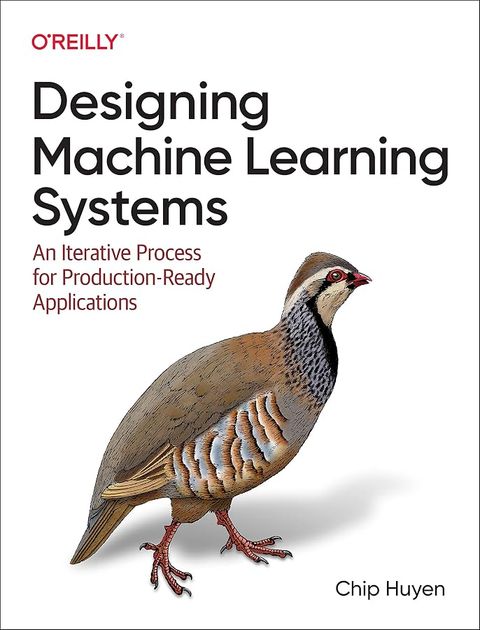
- Designing Machine Learning Systems Chip Huyen
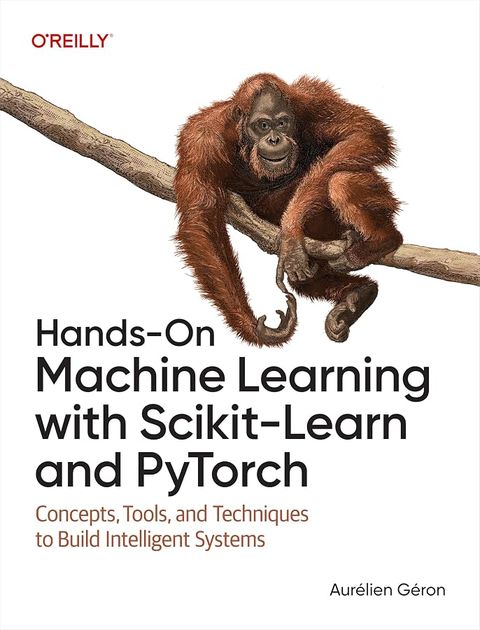
- Hands-On Machine Learning with Scikit-Learn and PyTorch Aurélien Géron
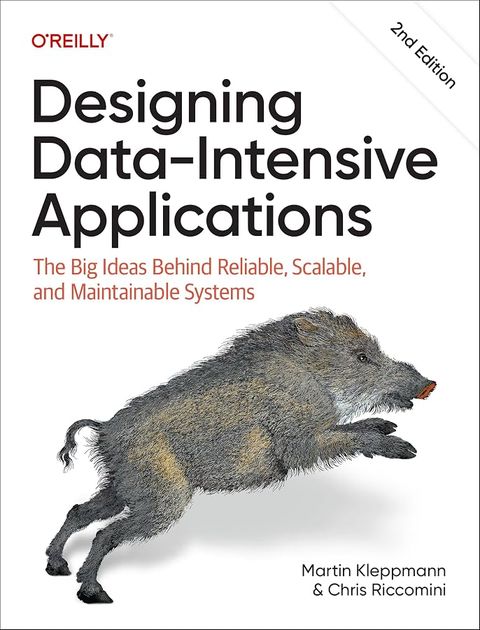
- Designing Data-Intensive Applications Martin Kleppmann and Chris Riccomini
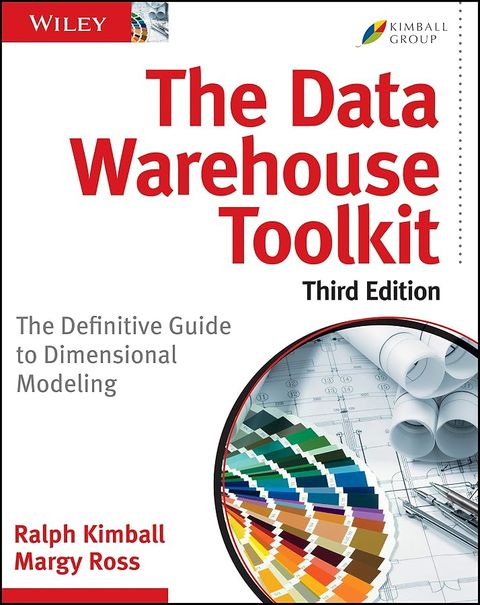
- The Data Warehouse Toolkit Ralph Kimball and Margy Ross
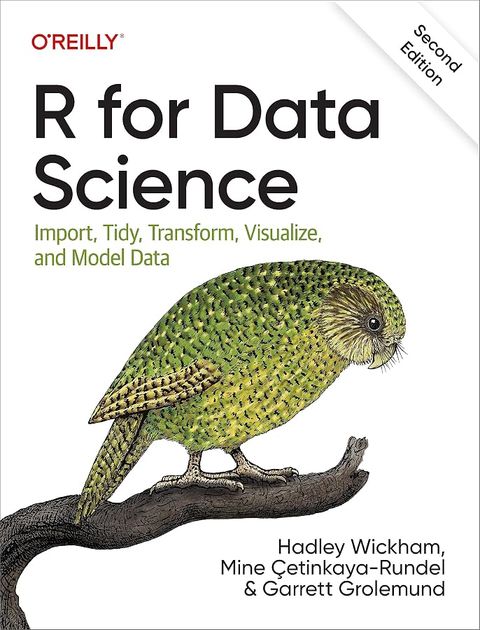
- R for Data Science Hadley Wickham and Garrett Grolemund
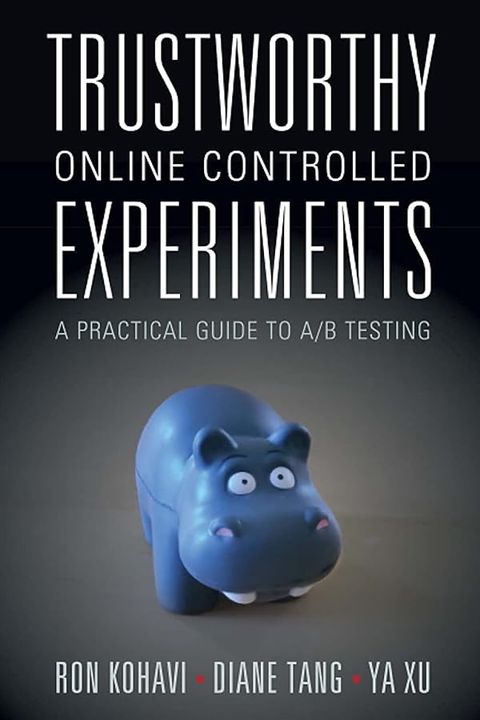
- Trustworthy Online Controlled Experiments Ron Kohavi, Diane Tang and Ya Xu
Sources
As an Amazon Associate, Best AI Books earns from qualifying purchases. Best AI Books is sponsored by Iternal.ai, whose founder and CEO, John Byron Hanby IV, wrote The AI Strategy Blueprint, our #1 ranked book. How we rank books.
