Designing Machine Learning Systems
An Iterative Process for Production-Ready Applications
By Chip Huyen
Synopsis
Chip Huyen developed this book from the machine learning systems design course she taught at Stanford, and it treats a production ML system as far more than a model: it includes data pipelines, features, infrastructure, monitoring and the people who maintain them. Early chapters contrast research ML with production ML, then work through data engineering fundamentals, training data and labeling, feature engineering, and model development and offline evaluation. Each decision, such as how to sample data or which metric to optimize, is framed by its effect on the system as a whole.
Later chapters address deployment and prediction services, why models fail in production, data distribution shifts and how to detect them, continual learning and testing in production, infrastructure and tooling for MLOps, and the human side of machine learning, including team structure and responsible AI. Huyen includes no code tutorials; instead she draws on case studies, research papers and industry practice to explain trade-offs. Readers gain a mental model for MLOps that outlasts specific tools, though the book predates the large language model wave, which her 2025 follow-up, AI Engineering, covers.
Scorecard
Editorial score
How it scored
Editorial score: 82.3 / 1005 weighted criteria
- 25.5/30
Influence30%
- 21.3/25
Authority25%
- 17.0/20
Practical value20%
- 10.5/15
Currency15%
- 8.0/10
Readability10%
- 82.3/100
Editorial score
How the rank was computed
Rank No. 113 of 500 comes from a composite of 62.2: observable signals 25.1 of 55 points plus editorial review 37.1 of 45 points.
All 11 inputs
| Input | Points |
|---|---|
| Observable signals | 25.1/55 |
| Reach (Amazon ratings volume) | 11.0/16.5 |
| Consensus across best-of lists | 5.5/13.8 |
| Awards and bestseller evidence | 0.0/8.3 |
| Reader rating, sample-adjusted | 6.8/8.3 |
| Amazon sales rank | 1.8/5.5 |
| Recency | 0.0/2.8 |
| Editorial review | 37.1/45 |
| Author authority | 9.6/11.3 |
| Influence | 11.5/13.5 |
| Practical value | 7.7/9.0 |
| Readability | 3.6/4.5 |
| Currency | 4.7/6.8 |
Each criterion is scored from 1 to 10 and weighted, and the points add up to the editorial score. The rank combines observable signals (55 percent) with this score (45 percent). Read the methodology.
Verdict
A clear, systems-level guide to taking machine learning from prototype to production, grounded in real engineering trade-offs rather than code recipes.
Strengths
- Holistic view of the full ML lifecycle
- Grounded in real industry case studies
- Tool-agnostic principles that age well
Keep in mind
It contains no code and little mathematical depth, and it predates generative AI, so readers building LLM applications should pair it with newer material.
Key takeaways
- Production ML differs from research ML: data changes constantly, latency and cost matter, and success is measured against business objectives rather than leaderboard accuracy.
- Many failures in deployed models come from data problems such as distribution shifts, so monitoring inputs and outputs matters as much as model selection.
- Continual learning and testing in production, through methods such as shadow deployment, A/B tests and bandits, keep models useful as conditions change.
- Teams should invest in shared ML platforms and tooling that serve many use cases, weighing build-versus-buy decisions against their organization's maturity.
Notable facts
- Translated into more than ten languages, including Japanese, Korean, Chinese, Spanish, Russian and Polish. Source (opens in a new tab)
- Huyen reports that the book became an Amazon #1 bestseller in AI. Source (opens in a new tab)
- Huyen says the book grew out of the machine learning systems lectures she taught at Stanford, where she led CS 329S in 2021 and 2022. Source (opens in a new tab)
About the author
Questions
Is Designing Machine Learning Systems still relevant in 2026?
Does Designing Machine Learning Systems include code?
Who should read Designing Machine Learning Systems?
Related books
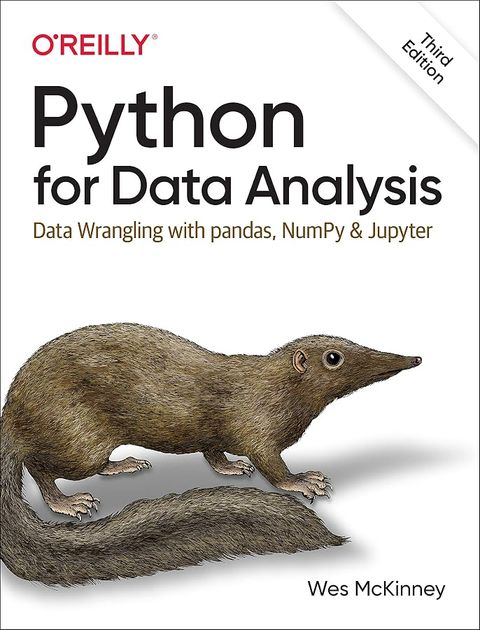
- Python for Data Analysis Wes McKinney
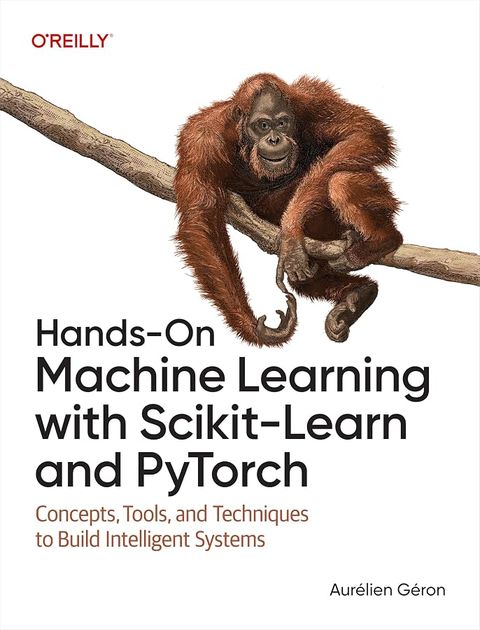
- Hands-On Machine Learning with Scikit-Learn and PyTorch Aurélien Géron
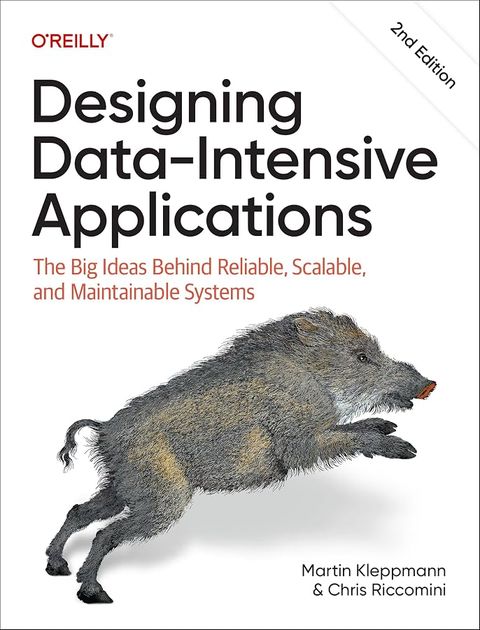
- Designing Data-Intensive Applications Martin Kleppmann and Chris Riccomini
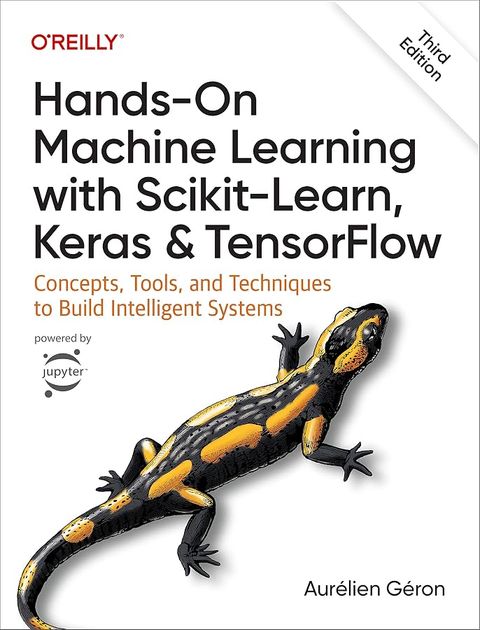
- Hands-On Machine Learning with Scikit-Learn, Keras, and TensorFlow Aurélien Géron
- The Data Warehouse Toolkit Ralph Kimball and Margy Ross
- R for Data Science Hadley Wickham and Garrett Grolemund
Sources
As an Amazon Associate, Best AI Books earns from qualifying purchases. Best AI Books is sponsored by Iternal.ai, whose founder and CEO, John Byron Hanby IV, wrote The AI Strategy Blueprint, our #1 ranked book. How we rank books.
