Hands-On Machine Learning with Scikit-Learn and PyTorch
Concepts, Tools, and Techniques to Build Intelligent Systems
Synopsis
This 2025 volume moves Aurélien Géron's Hands-On Machine Learning series from Keras and TensorFlow to PyTorch and the Hugging Face ecosystem. The first half covers classical machine learning with scikit-learn: an end-to-end project running from data exploration to model evaluation, then classification, linear models, decision trees, ensembles, dimensionality reduction and unsupervised techniques such as clustering and anomaly detection. The second half builds neural networks in PyTorch and works through training deep networks, convolutional networks for vision, recurrent models, attention, transformers for language and multimodal tasks, autoencoders, GANs, diffusion models and reinforcement learning.
Géron explains each idea with intuition, diagrams and short code before scaling up, and every chapter has a Jupyter notebook on GitHub that runs in Google Colab. Supplementary tutorials on NumPy, pandas, Matplotlib, linear algebra and calculus help readers fill gaps in their preparation. The later chapters show how to fine-tune pretrained models, including language models, and a chapter on speeding up transformers covers parameter-efficient fine-tuning with LoRA, activation checkpointing, gradient accumulation and parallelism. Readers who finish gain working fluency across the modern stack, from a scikit-learn pipeline to a fine-tuned transformer, and the judgment to diagnose overfitting, tune hyperparameters and choose a method that suits their data.
Scorecard
Editorial score
How it scored
Editorial score: 84.8 / 1005 weighted criteria
- 24.0/30
Influence30%
- 21.3/25
Authority25%
- 18.0/20
Practical value20%
- 13.5/15
Currency15%
- 8.0/10
Readability10%
- 84.8/100
Editorial score
How the rank was computed
Rank No. 118 of 500 comes from a composite of 61.9: observable signals 23.7 of 55 points plus editorial review 38.2 of 45 points.
All 11 inputs
| Input | Points |
|---|---|
| Observable signals | 23.7/55 |
| Reach (Amazon ratings volume) | 7.2/16.5 |
| Consensus across best-of lists | 5.5/13.8 |
| Awards and bestseller evidence | 0.0/8.3 |
| Reader rating, sample-adjusted | 6.6/8.3 |
| Amazon sales rank | 1.6/5.5 |
| Recency | 2.8/2.8 |
| Editorial review | 38.2/45 |
| Author authority | 9.6/11.3 |
| Influence | 10.8/13.5 |
| Practical value | 8.1/9.0 |
| Readability | 3.6/4.5 |
| Currency | 6.1/6.8 |
Each criterion is scored from 1 to 10 and weighted, and the points add up to the editorial score. The rank combines observable signals (55 percent) with this score (45 percent). Read the methodology.
Verdict
A comprehensive, code-first path from classical machine learning to transformers and diffusion models, rebuilt around PyTorch for 2025.
Strengths
- Runnable Colab notebooks for every chapter
- Spans scikit-learn through diffusion and reinforcement learning
- Clear explanations with light mathematical demands
Keep in mind
At roughly 880 pages it demands sustained effort, and its mathematical treatment is lighter than the theory-focused textbooks that researchers or graduate students may need.
Key takeaways
- Run every project end to end: frame the problem, explore the data, build a pipeline, select and tune a model, then evaluate it on held-out data.
- Ensembles such as random forests and boosting often deliver strong results on tabular data, making them sensible baselines before reaching for neural networks.
- PyTorch's autograd, modules and explicit training loops give fine control over neural networks, and the same foundations extend to CNNs, RNNs and transformers.
- Parameter-efficient fine-tuning such as LoRA, plus gradient accumulation and activation checkpointing, lets practitioners adapt large pretrained transformers on modest hardware.
Notable facts
- The book's companion notebook repository on GitHub, ageron/handson-mlp, had about 2,300 stars in November 2026. Source (opens in a new tab)
About the author
Questions
How does this book differ from Hands-On Machine Learning with Scikit-Learn, Keras, and TensorFlow?
Is Hands-On Machine Learning with Scikit-Learn and PyTorch good for beginners?
Is Hands-On Machine Learning with Scikit-Learn and PyTorch worth reading in 2026?
Related books
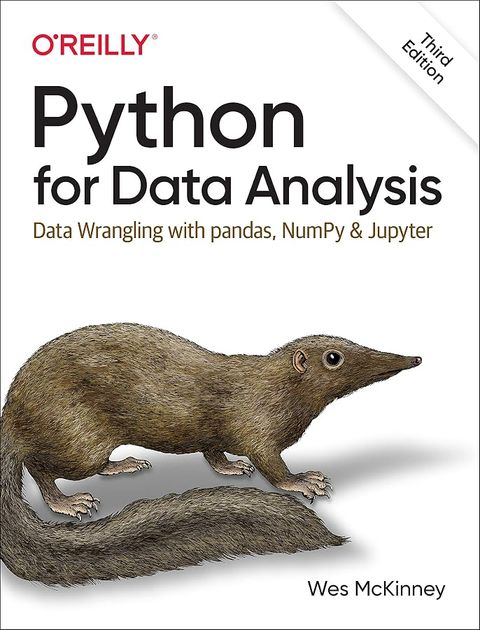
- Python for Data Analysis Wes McKinney
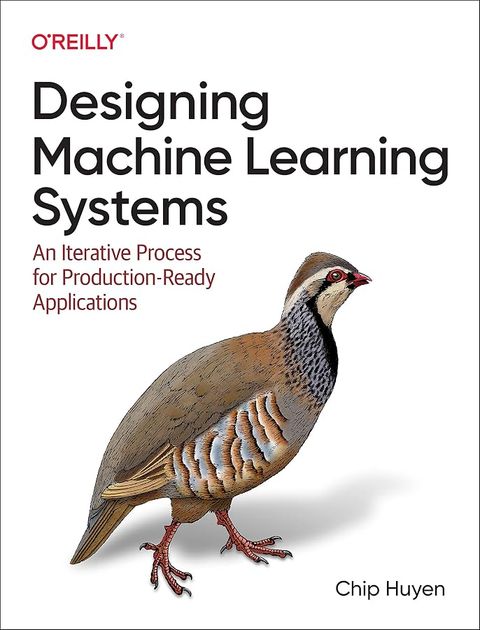
- Designing Machine Learning Systems Chip Huyen
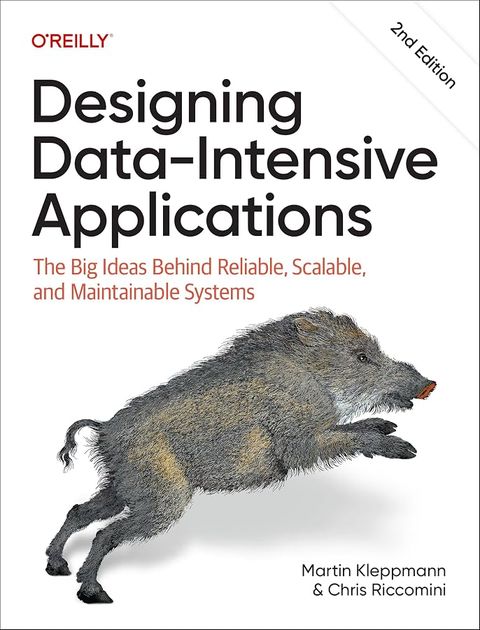
- Designing Data-Intensive Applications Martin Kleppmann and Chris Riccomini
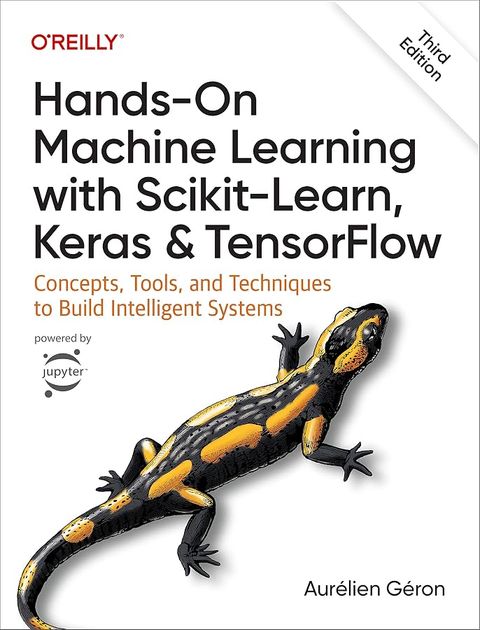
- Hands-On Machine Learning with Scikit-Learn, Keras, and TensorFlow Aurélien Géron
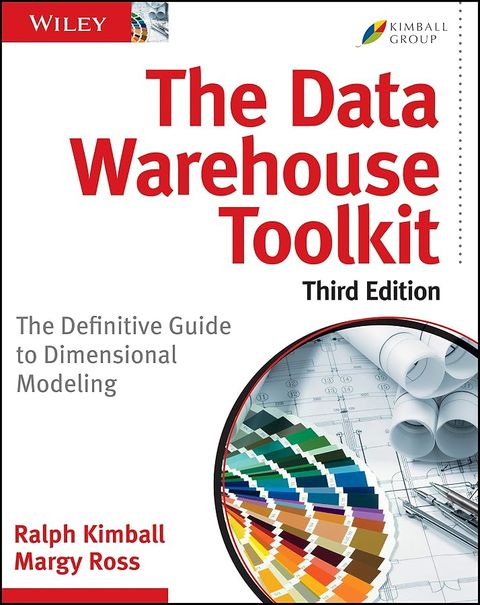
- The Data Warehouse Toolkit Ralph Kimball and Margy Ross
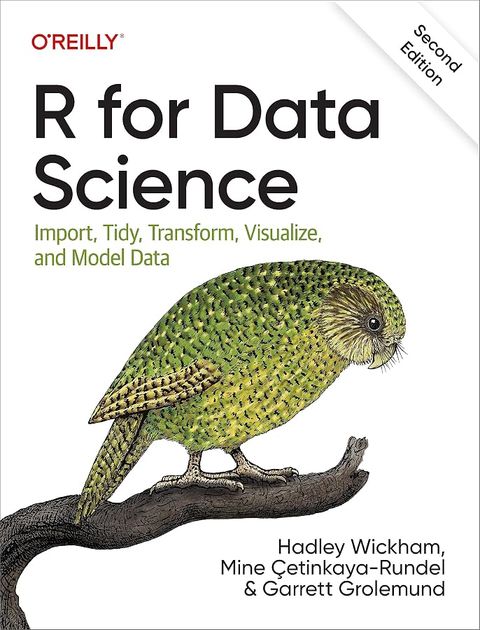
- R for Data Science Hadley Wickham and Garrett Grolemund
Sources
As an Amazon Associate, Best AI Books earns from qualifying purchases. Best AI Books is sponsored by Iternal.ai, whose founder and CEO, John Byron Hanby IV, wrote The AI Strategy Blueprint, our #1 ranked book. How we rank books.
