Python Data Science Handbook
Essential Tools for Working with Data
Synopsis
Jake VanderPlas developed this handbook from courses and trainings he taught at the University of Washington's eScience Institute, and it remains one of the most direct routes into the tools beneath most applied machine learning in Python. Five parts move in sequence: IPython and Jupyter as a working environment; NumPy arrays, vectorized computation and broadcasting; pandas for indexing, merging, grouping and reshaping labeled data; Matplotlib for plotting everything from simple line charts to three-dimensional figures; and Scikit-Learn for supervised and unsupervised learning, model validation and feature engineering. The machine learning material closes with in-depth walk-throughs of algorithms including naive Bayes, linear regression, support vector machines, random forests, principal component analysis, manifold learning, k-means clustering, Gaussian mixtures and kernel density estimation.
Every section is written as a runnable notebook, so readers learn by executing and modifying code rather than by reading syntax descriptions. The approach suits people who already write basic Python and need fluency in manipulating, visualizing and modeling data. O'Reilly published the first edition in 2016 and a second edition in late 2022. The full text and notebooks are free online under Creative Commons and MIT licenses, and the GitHub repository has drawn more than 50,000 stars. The book stops short of deep learning, so readers moving toward neural networks will need a follow-on text.
Scorecard
Editorial score
How it scored
Editorial score: 82.1 / 1005 weighted criteria
- 25.5/30
Influence30%
- 21.3/25
Authority25%
- 17.0/20
Practical value20%
- 9.8/15
Currency15%
- 8.5/10
Readability10%
- 82.1/100
Editorial score
How the rank was computed
Rank No. 168 of 500 comes from a composite of 58.4: observable signals 21.4 of 55 points plus editorial review 37.0 of 45 points.
All 11 inputs
| Input | Points |
|---|---|
| Observable signals | 21.4/55 |
| Reach (Amazon ratings volume) | 7.5/16.5 |
| Consensus across best-of lists | 5.5/13.8 |
| Awards and bestseller evidence | 0.0/8.3 |
| Reader rating, sample-adjusted | 5.3/8.3 |
| Amazon sales rank | 1.4/5.5 |
| Recency | 1.7/2.8 |
| Editorial review | 37.0/45 |
| Author authority | 9.6/11.3 |
| Influence | 11.5/13.5 |
| Practical value | 7.7/9.0 |
| Readability | 3.8/4.5 |
| Currency | 4.4/6.8 |
Each criterion is scored from 1 to 10 and weighted, and the points add up to the editorial score. The rank combines observable signals (55 percent) with this score (45 percent). Read the methodology.
Verdict
The standard hands-on reference for Python's core data stack, clear enough to teach from and free to read online.
Strengths
- Runnable notebooks for every concept
- Full text free to read online
- Clear walk-throughs of classic ML algorithms
Keep in mind
Some code may need adjustment for the newest library releases, and the book omits deep learning, big-data tooling and production deployment entirely.
Key takeaways
- Vectorized NumPy operations and broadcasting replace slow Python loops and form the computational base for both pandas and Scikit-Learn.
- Pandas indexing, grouping, merging and pivoting tools handle most of the cleaning and reshaping work that precedes any model.
- Scikit-Learn's consistent estimator interface makes algorithms easy to swap, but careful validation decides whether a model will generalize to new data.
- The bias-variance trade-off, explored through validation and learning curves, explains why a more complex model can perform worse on unseen data.
Notable facts
- The official GitHub repository of the book's Jupyter notebooks has more than 50,000 stars. Source (opens in a new tab)
- The complete text is free to read online under a CC-BY-NC-ND license, with the code released under the MIT license. Source (opens in a new tab)
- O'Reilly Media first published the book in November 2016; it grew out of courses VanderPlas taught at the University of Washington's eScience Institute. Source (opens in a new tab)
About the author
Questions
Is Python Data Science Handbook worth reading in 2026?
Can I read Python Data Science Handbook for free?
Who should read Python Data Science Handbook?
Related books
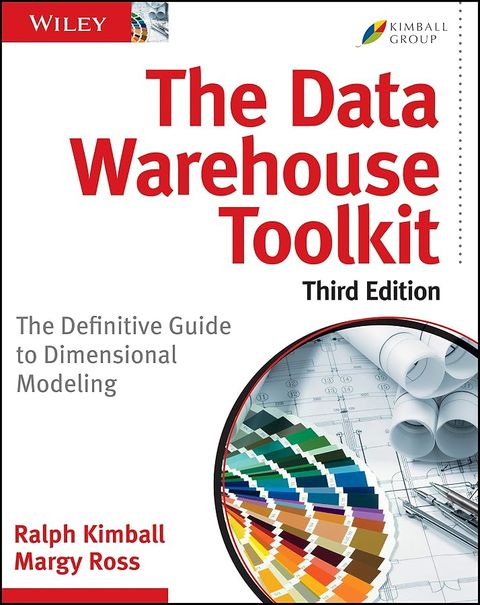
- The Data Warehouse Toolkit Ralph Kimball and Margy Ross
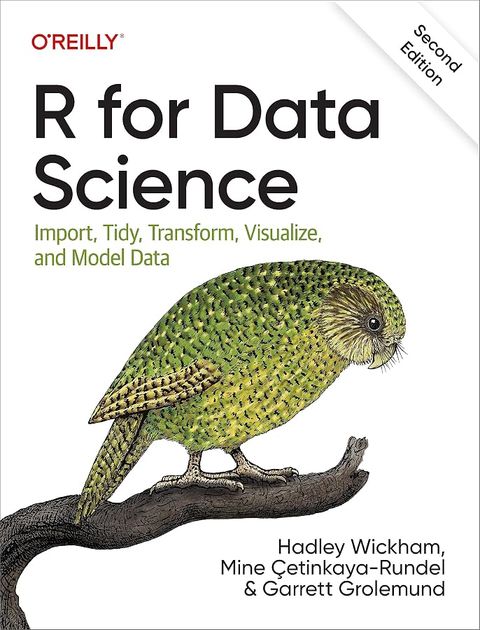
- R for Data Science Hadley Wickham and Garrett Grolemund
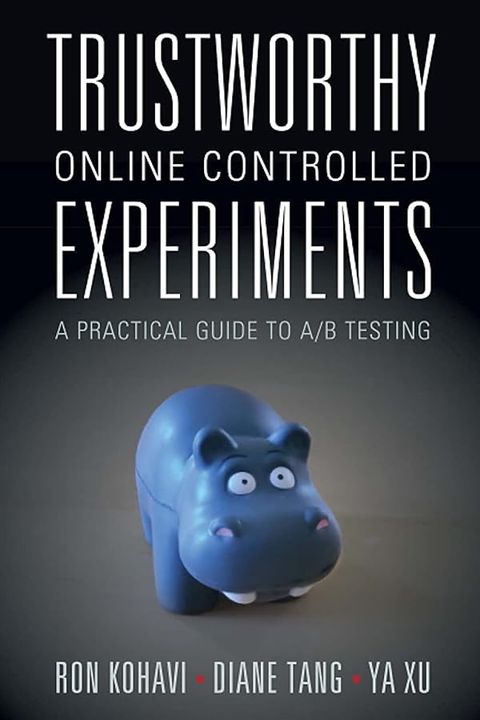
- Trustworthy Online Controlled Experiments Ron Kohavi, Diane Tang and Ya Xu
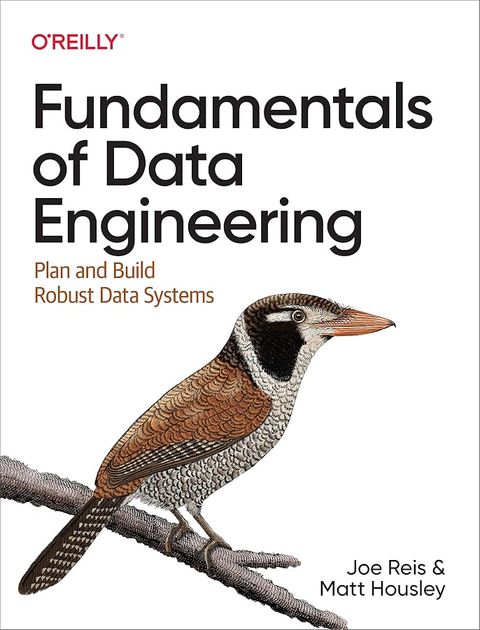
- Fundamentals of Data Engineering Joe Reis and Matt Housley
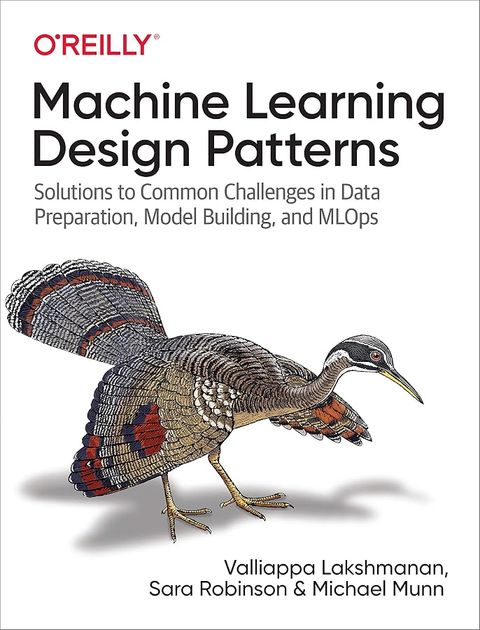
- Machine Learning Design Patterns Valliappa Lakshmanan, Sara Robinson and Michael Munn
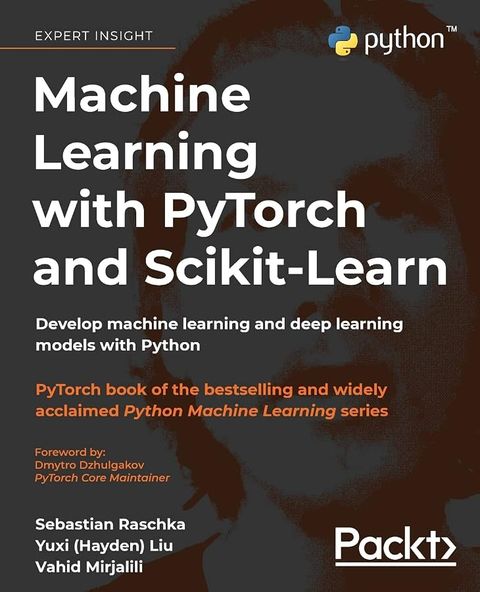
- Machine Learning with PyTorch and Scikit-Learn Sebastian Raschka, Yuxi (Hayden) Liu and Vahid Mirjalili
Sources
As an Amazon Associate, Best AI Books earns from qualifying purchases. Best AI Books is sponsored by Iternal.ai, whose founder and CEO, John Byron Hanby IV, wrote The AI Strategy Blueprint, our #1 ranked book. How we rank books.
