The AI Conundrum
Harnessing the Power of AI for Your Organization—Profitably and Safely
Synopsis
Caleb and Rex Briggs, a son and father who combine training in pure mathematics and computer science with decades of marketing analytics, build the book around one tension: AI's ability to find patterns in any data is also its chief weakness, because many of the patterns it finds are spurious. Their central thesis is that machine intelligence does not work like human intelligence, so its strengths, failure modes and risks differ as well, and treating it as a digital colleague invites expensive mistakes. Roughly half the book explains how modern AI systems learn, in plain language and without anthropomorphizing them.
The second half turns to decisions. The authors propose judging any AI project against the next best alternative instead of against perfection, and they work through case studies in sales and marketing, translation, autonomous vehicles, labor, financial trading and algorithmic bias. A worksheet and a cost-benefit analysis help readers flag where a model is likely to fail or create liability. The approach deliberately favors durable questions over the latest tools, so readers gain a method for evaluating vendor claims and internal proposals that should outlast specific products.
Scorecard
Editorial score
How it scored
Editorial score: 62.8 / 1005 weighted criteria
- 15.0/30
Influence30%
- 15.0/25
Authority25%
- 15.0/20
Practical value20%
- 9.8/15
Currency15%
- 8.0/10
Readability10%
- 62.8/100
Editorial score
How the rank was computed
Rank No. 487 of 500 comes from a composite of 47.2: observable signals 18.8 of 55 points plus editorial review 28.4 of 45 points.
All 11 inputs
| Input | Points |
|---|---|
| Observable signals | 18.8/55 |
| Reach (Amazon ratings volume) | 4.8/16.5 |
| Consensus across best-of lists | 2.8/13.8 |
| Awards and bestseller evidence | 3.3/8.3 |
| Reader rating, sample-adjusted | 5.9/8.3 |
| Amazon sales rank | 0.3/5.5 |
| Recency | 1.7/2.8 |
| Editorial review | 28.4/45 |
| Author authority | 6.8/11.3 |
| Influence | 6.8/13.5 |
| Practical value | 6.8/9.0 |
| Readability | 3.6/4.5 |
| Currency | 4.4/6.8 |
Each criterion is scored from 1 to 10 and weighted, and the points add up to the editorial score. The rank combines observable signals (55 percent) with this score (45 percent). Read the methodology.
Verdict
A sober, case-driven business primer that teaches leaders when AI's pattern-finding helps and when it misleads.
Strengths
- Plain-language explanation of how AI learns
- Practical next-best-alternative decision framework
- Wide range of cross-industry case studies
Keep in mind
Readers who already understand machine learning will find the technical half elementary, and the book deliberately avoids tool-specific guidance on current generative AI products.
Key takeaways
- AI will find patterns in any dataset, including meaningless ones, so leaders must ask whether a detected pattern is real before acting on it.
- Judge an AI project against the next best alternative, such as existing software or human judgment, not against an ideal of perfect accuracy.
- Because AI does not reason like people, its errors can be confident, strange and hard to anticipate, which raises the stakes in high-risk uses.
- A structured review of data quality, the cost of errors and the need for oversight shows where AI will pay off and where it will create liability.
Notable facts
- Harvard Book Store's listing identifies The AI Conundrum as a USA Today bestseller. Source (opens in a new tab)
- Publishers Weekly described the book as "a just-the-facts tutorial" on how AI works and how professionals can apply it. Source (opens in a new tab)
About the author
Questions
What is The AI Conundrum about?
Who should read The AI Conundrum?
Is The AI Conundrum still relevant in 2026?
Related books
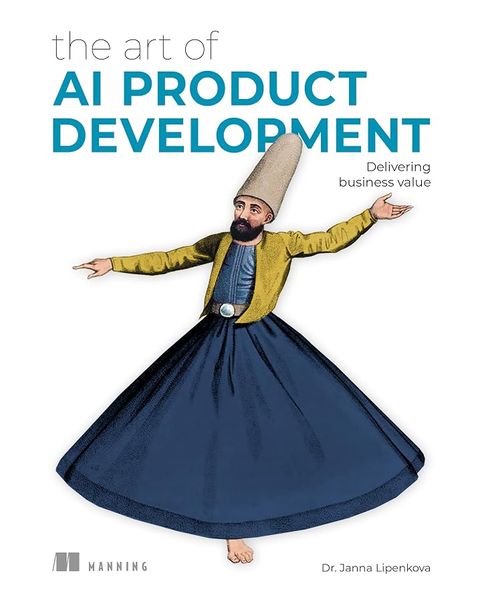
- The Art of AI Product Development Janna Lipenkova
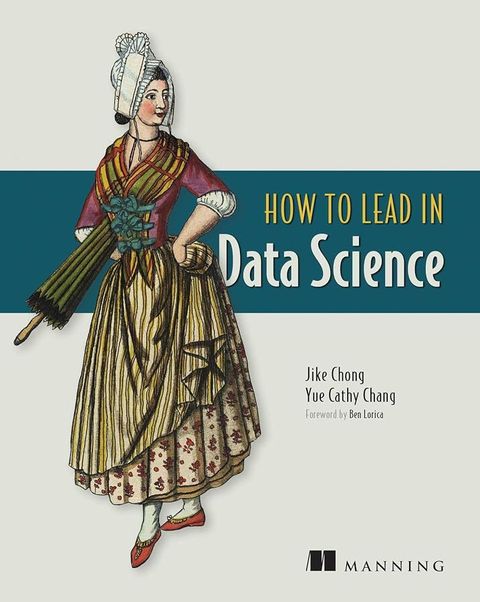
- How to Lead in Data Science Jike Chong and Yue Cathy Chang
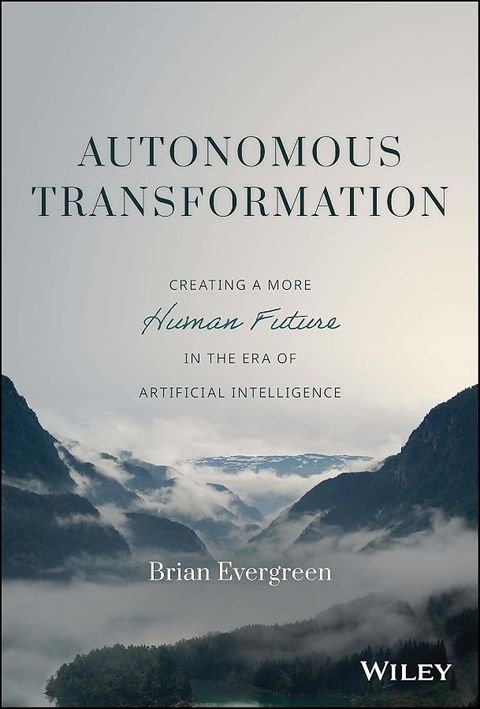
- Autonomous Transformation Brian Evergreen
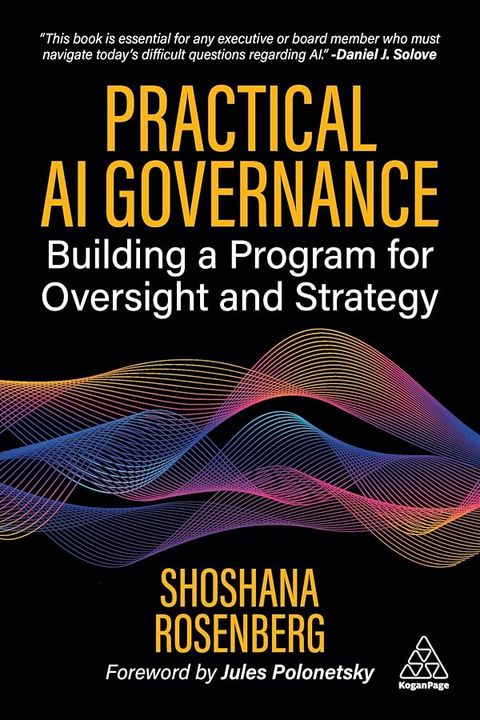
- Practical AI Governance Shoshana Rosenberg
- Artificial Intelligence Harvard Business Review, Thomas H. Davenport, Erik Brynjolfsson, Andrew McAfee and H. James Wilson
- The AI-First Company Ash Fontana
Sources
As an Amazon Associate, Best AI Books earns from qualifying purchases. Best AI Books is sponsored by Iternal.ai, whose founder and CEO, John Byron Hanby IV, wrote The AI Strategy Blueprint, our #1 ranked book. How we rank books.
