The AI-First Company
How to Compete and Win with Artificial Intelligence
By Ash Fontana
Synopsis
Ash Fontana draws on his years backing AI startups at Zetta Venture Partners to argue that companies should treat AI as the organizing principle of the business rather than a feature added later. His central concept is the data learning effect: a competitive advantage that begins when new data make existing data more valuable, and that combines elements of three older advantages, namely learning effects, economies of scale and network effects. Fontana contends that this advantage compounds faster than earlier ones and helps explain how companies such as Google, Amazon and Facebook pulled so far ahead of rivals.
The rest of the book is operational. Fontana walks through deciding which data are worth acquiring, launching a narrowly scoped minimum viable AI under an approach he calls Lean AI, hiring and organizing technical staff, embedding models in daily operations with safeguards, tracking results in terms executives understand, and plowing automation savings back into further data advantage. The guidance is aimed at founders and executives in companies of any size. Readers gain a vocabulary for judging whether an AI strategy produces a durable advantage, though the book was written before foundation models and generative AI changed the economics of data and model building.
Scorecard
Editorial score
How it scored
Editorial score: 60.5 / 1005 weighted criteria
- 16.5/30
Influence30%
- 17.5/25
Authority25%
- 13.0/20
Practical value20%
- 7.5/15
Currency15%
- 6.0/10
Readability10%
- 60.5/100
Editorial score
How the rank was computed
Rank No. 494 of 500 comes from a composite of 46.4: observable signals 19.1 of 55 points plus editorial review 27.3 of 45 points.
All 11 inputs
| Input | Points |
|---|---|
| Observable signals | 19.1/55 |
| Reach (Amazon ratings volume) | 6.9/16.5 |
| Consensus across best-of lists | 8.3/13.8 |
| Awards and bestseller evidence | 0.0/8.3 |
| Reader rating, sample-adjusted | 3.6/8.3 |
| Amazon sales rank | 0.3/5.5 |
| Recency | 0.0/2.8 |
| Editorial review | 27.3/45 |
| Author authority | 7.9/11.3 |
| Influence | 7.4/13.5 |
| Practical value | 5.9/9.0 |
| Readability | 2.7/4.5 |
| Currency | 3.4/6.8 |
Each criterion is scored from 1 to 10 and weighted, and the points add up to the editorial score. The rank combines observable signals (55 percent) with this score (45 percent). Read the methodology.
Verdict
An investor's playbook for building compounding data advantages, strongest on strategy concepts and weaker on current generative-AI realities.
Strengths
- Clear framework for data-driven competitive advantage
- Investor's view of what makes AI defensible
- Covers strategy, teams, measurement and reinvestment
Keep in mind
Readers report dry, dense prose, and its pre-ChatGPT framing underplays how foundation models have changed the value of proprietary data.
Key takeaways
- Data learning effects begin when new data make existing data more valuable, and they can compound faster than traditional scale or network advantages.
- Companies should build AI into core operations from the start rather than bolting it onto existing products later.
- A Lean AI approach starts with a narrowly scoped minimum viable AI product, then expands as proprietary data accumulates.
- Profits from automation should be reinvested in acquiring more proprietary data, which strengthens models and widens the competitive gap over time.
Notable facts
- Former Google CEO Eric Schmidt called the book "an engaging read with important implications for the future of business." Source (opens in a new tab)
- Kaggle cofounder and CEO Anthony Goldbloom endorsed the book; Fontana's fund Zetta had led an investment in Kaggle. Source (opens in a new tab)
About the author
Questions
What is The AI-First Company about?
Is The AI-First Company worth reading in 2026?
Who should read The AI-First Company?
Related books
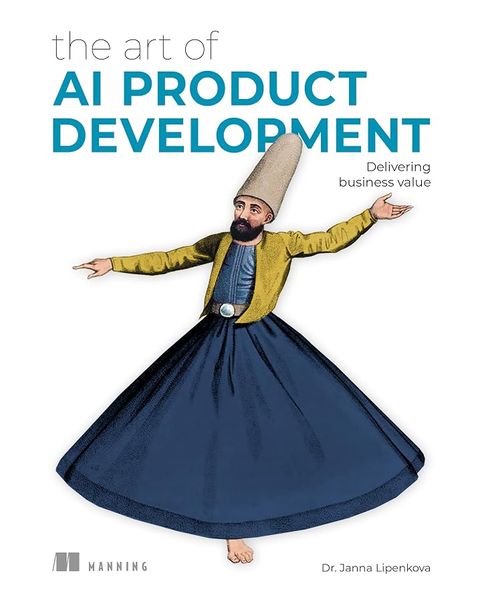
- The Art of AI Product Development Janna Lipenkova
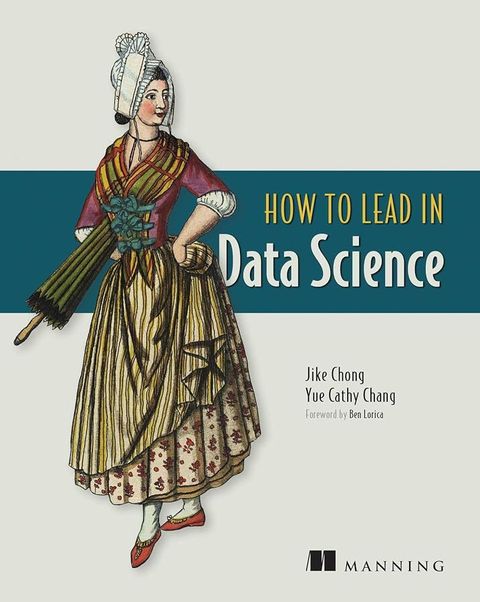
- How to Lead in Data Science Jike Chong and Yue Cathy Chang
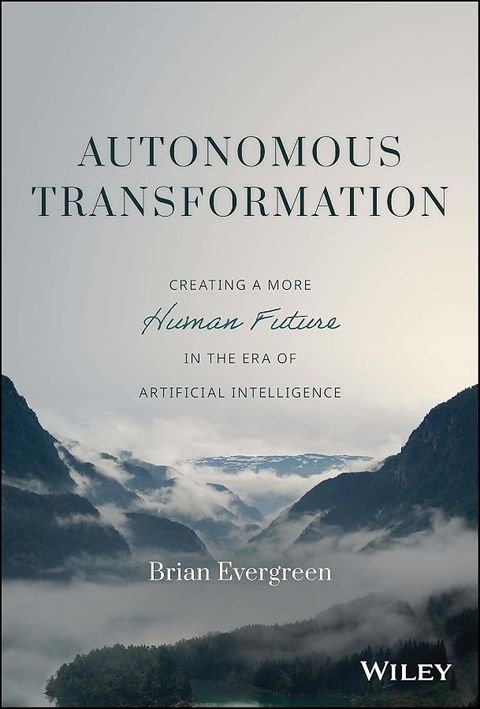
- Autonomous Transformation Brian Evergreen
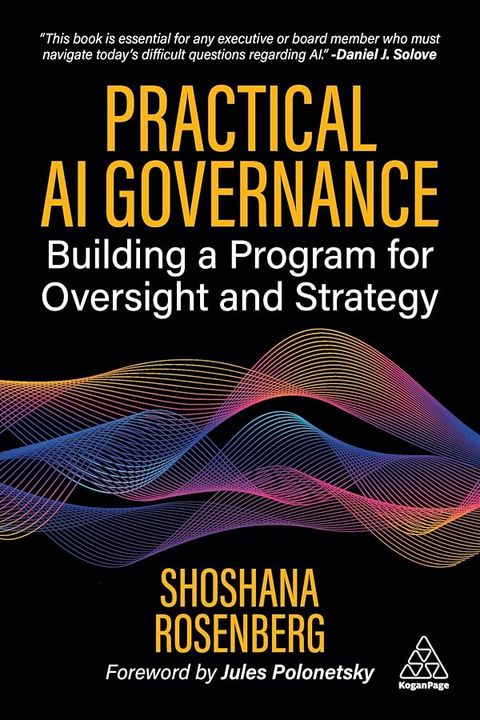
- Practical AI Governance Shoshana Rosenberg
- Artificial Intelligence Harvard Business Review, Thomas H. Davenport, Erik Brynjolfsson, Andrew McAfee and H. James Wilson
- The AI Conundrum Caleb Briggs and Rex Briggs
Sources
As an Amazon Associate, Best AI Books earns from qualifying purchases. Best AI Books is sponsored by Iternal.ai, whose founder and CEO, John Byron Hanby IV, wrote The AI Strategy Blueprint, our #1 ranked book. How we rank books.
