The Data Science Design Manual
Synopsis
Steven Skiena, best known for The Algorithm Design Manual, applies the same practical voice to data science, which he frames as the meeting point of statistics, computer science and machine learning. The book deliberately avoids tying itself to a programming language or tool suite. It works through mathematical preliminaries, data munging, scores and rankings, statistical analysis, visualization, mathematical models, linear algebra, regression, distance and network methods, machine learning and the engineering of big data, emphasizing why each technique works and when it misleads. Each chapter pairs intuition with enough mathematics to make the methods precise without becoming a statistics treatise.
Skiena's teaching devices carry much of the value. War stories recount his own applied projects and the reasoning behind them, Take-Home Lessons distill each idea, False Starts explain approaches that fail, and Kaggle challenges and homework exercises give readers material for practice. Examples from The Quant Shop, a data science television series, along with lecture slides and videos at data-manual.com, support classroom use. Readers come away with sound habits for framing questions, cleaning data, building baseline models and evaluating results skeptically, habits that transfer to whatever languages and libraries they later adopt.
Scorecard
Editorial score
How it scored
Editorial score: 69.8 / 1005 weighted criteria
- 19.5/30
Influence30%
- 20.0/25
Authority25%
- 14.0/20
Practical value20%
- 8.3/15
Currency15%
- 8.0/10
Readability10%
- 69.8/100
Editorial score
How the rank was computed
Rank No. 431 of 500 comes from a composite of 48.9: observable signals 17.5 of 55 points plus editorial review 31.4 of 45 points.
All 11 inputs
| Input | Points |
|---|---|
| Observable signals | 17.5/55 |
| Reach (Amazon ratings volume) | 7.1/16.5 |
| Consensus across best-of lists | 2.8/13.8 |
| Awards and bestseller evidence | 0.0/8.3 |
| Reader rating, sample-adjusted | 7.0/8.3 |
| Amazon sales rank | 0.6/5.5 |
| Recency | 0.0/2.8 |
| Editorial review | 31.4/45 |
| Author authority | 9.0/11.3 |
| Influence | 8.8/13.5 |
| Practical value | 6.3/9.0 |
| Readability | 3.6/4.5 |
| Currency | 3.7/6.8 |
Each criterion is scored from 1 to 10 and weighted, and the points add up to the editorial score. The rank combines observable signals (55 percent) with this score (45 percent). Read the methodology.
Verdict
A principles-first introduction to data science from an award-winning teacher, valuable for judgment and modeling sense more than tooling.
Strengths
- Language-agnostic focus on lasting principles
- Memorable war stories from real projects
- Free slides and video lectures online
Keep in mind
Readers who want hands-on Python or R instruction will need a companion text, and its 2017 machine learning chapter predates modern deep learning practice.
Key takeaways
- Most of a data science project's success is decided before modeling, in how the question is framed and how carefully the data are collected and cleaned.
- Simple baseline models, such as linear regression or nearest neighbors, should be built and evaluated first, because they set the bar complex methods must clear.
- Scores and rankings that combine several measures require careful normalization and validation, or they encode arbitrary choices as apparent objectivity.
- Good visualizations follow principles such as maximizing data-ink and avoiding chart junk, so the reader sees the pattern rather than the decoration.
Notable facts
- A February 2018 Computing Reviews review by P. Navrat recommended it as a textbook for academic courses and as useful for industry software engineers doing data science tasks. Source (opens in a new tab)
About the author
Questions
Does The Data Science Design Manual teach Python?
Is The Data Science Design Manual good for beginners?
Is The Data Science Design Manual still relevant in 2026?
Related books
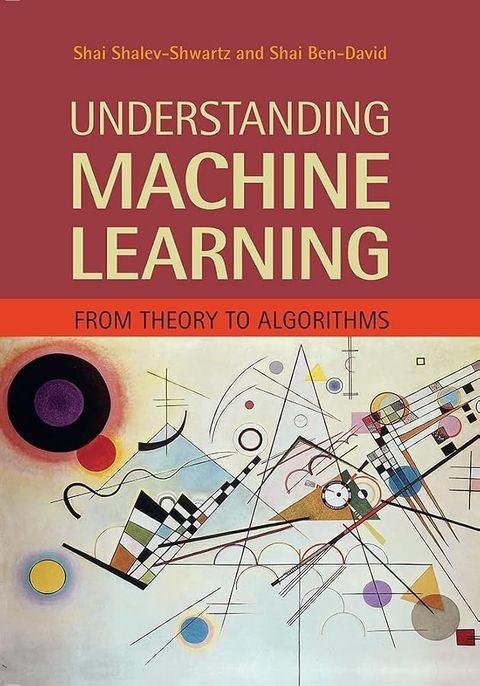
- Understanding Machine Learning Shai Shalev-Shwartz and Shai Ben-David
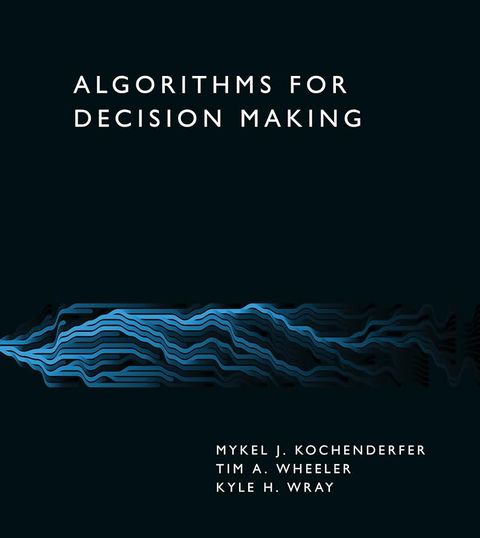
- Algorithms for Decision Making Mykel J. Kochenderfer, Tim A. Wheeler and Kyle H. Wray
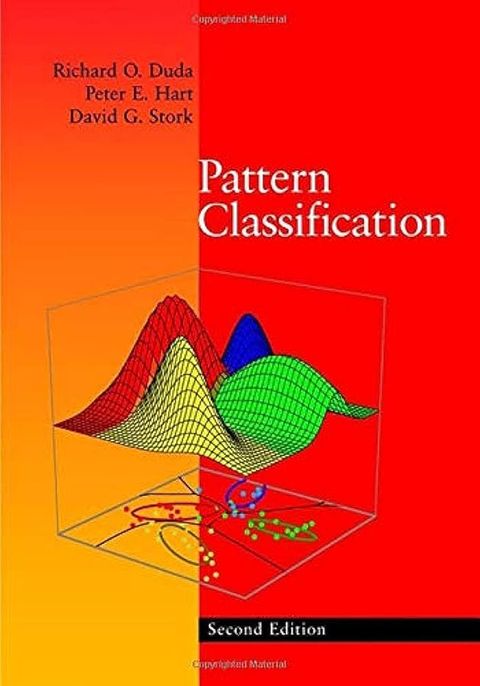
- Pattern Classification Richard O. Duda, Peter E. Hart and David G. Stork
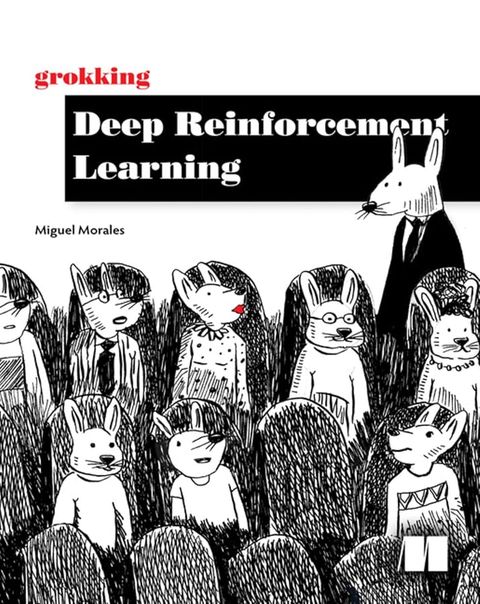
- Grokking Deep Reinforcement Learning Miguel Morales
- Data Smart John W. Foreman
- Bayesian Methods for Hackers Cameron Davidson-Pilon
Sources
As an Amazon Associate, Best AI Books earns from qualifying purchases. Best AI Books is sponsored by Iternal.ai, whose founder and CEO, John Byron Hanby IV, wrote The AI Strategy Blueprint, our #1 ranked book. How we rank books.
