Deep Learning
The 40 Best Deep Learning Books (2026)
From building a GPT-style model in PyTorch to graduate textbooks on probability and generative models, these 40 books explain how neural networks learn, ranked for readers at every level.
As an Amazon Associate, Best AI Books earns from qualifying purchases. Best AI Books is sponsored by Iternal.ai, whose founder and CEO, John Byron Hanby IV, wrote The AI Strategy Blueprint, our #1 ranked book. How we rank books.
Quick picks
Best overall
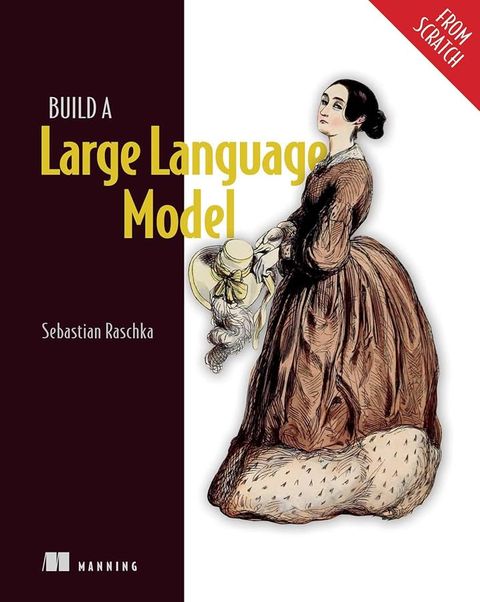
Build a Large Language Model (From Scratch)Readers code a GPT-style model in plain PyTorch, from tokenization and attention through pretraining and fine-tuning, on hardware as modest as a conventional laptop.
Best for general readers
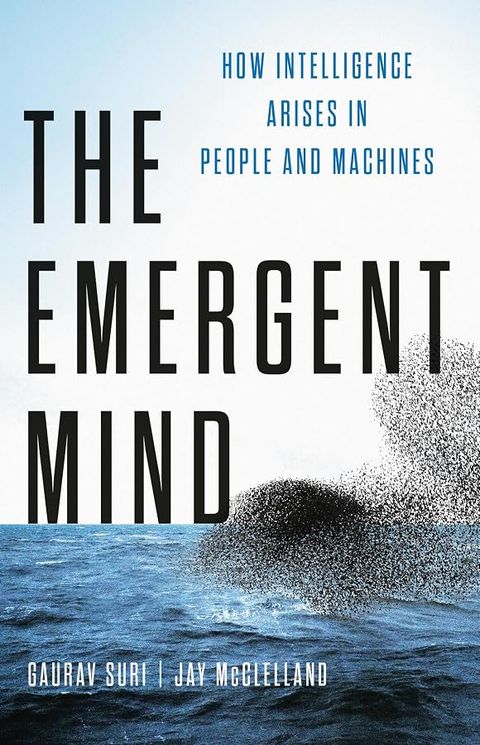
The Emergent MindA psychologist and a pioneer of neural network modeling explain for a general audience how intelligence emerges from networks of simple units in brains and machines.
Best for building LLM applications
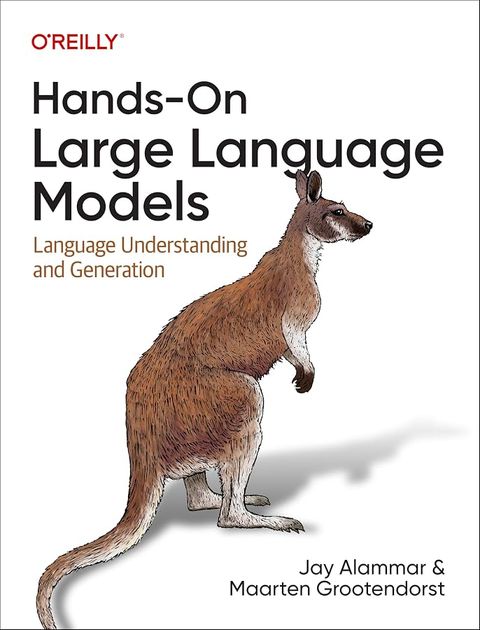
Hands-On Large Language ModelsAlmost 300 custom figures and a Colab notebook per chapter take developers from embeddings to retrieval-augmented generation and LoRA fine-tuning.
Deep learning is the branch of machine learning that trains neural networks with many layers to learn useful representations directly from data, instead of relying on features that engineers design by hand. The same family of methods now drives image recognition, speech recognition, machine translation and the large language models behind modern chatbots. The Association for Computing Machinery recognized the field's importance when it named Yoshua Bengio, Geoffrey Hinton and Yann LeCun recipients of the 2018 Turing Award "for conceptual and engineering breakthroughs that have made deep neural networks a critical component of computing," according to the ACM's announcement.
The 40 books ranked below serve three kinds of reader. Programmers who learn by building will find code-first courses in PyTorch, Keras and the Hugging Face libraries, led by Sebastian Raschka's step-by-step construction of a GPT-style model, whose code is designed to run on conventional laptops. Students and researchers will find textbooks that develop the probability, linear algebra and optimization beneath that code. General readers and managers will find clear, largely equation-free explanations of how neural networks learn and where they still fail.
How to use these rankings
Start with the level shown for each book. Beginner titles assume no programming or calculus. Intermediate titles assume working Python and comfort with basic algebra. Advanced titles assume calculus, linear algebra and probability. A sound reading sequence runs from one conceptual primer to one code-first course and then one rigorous textbook, followed by a specialist volume on language, vision, reinforcement learning or generative models when a project calls for one.
Check the edition before buying. Several books carry the year of their first edition, yet their current editions have been rebuilt around transformers, diffusion models and newer frameworks. Aurélien Géron released a PyTorch-based edition of his hands-on series in 2025, and the third edition of François Chollet's Deep Learning with Python uses Keras 3, which runs on TensorFlow, PyTorch or JAX. Readers who already work in one framework should favor books written for it.
Several of the strongest textbooks are free to read online, so readers can test the level before paying for print. Goodfellow, Bengio and Courville keep the complete text of their Deep Learning available online at no charge. Dive into Deep Learning publishes its full text, notebooks and PDF at d2l.ai and reports adoption at 500 universities in 70 countries. Christopher and Hugh Bishop offer a free-to-use online version of their textbook on the book's official site.
Ranked No. 1 overall

No. 01 of 500 · AI Strategy & Leadership
The AI Strategy Blueprint
John Byron Hanby IV · 2026 · More than 2 million copies delivered
The ranking
- Rank 01
Raschka, a former assistant professor of statistics at the University of Wisconsin-Madison, takes readers from raw text to a working GPT-style model without any prebuilt LLM library. The chapters follow the order in which a real model is made: tokenizing and batching text, coding self-attention with a causal mask, assembling the GPT architecture, pretraining on unlabeled text, then loading released GPT-2 weights to see what costly full-scale pretraining adds. Later chapters fine-tune the same network as a text classifier and as an instruction-following assistant, and an appendix adds LoRA. It ranks first because no other book here turns transformer theory into runnable code so directly.
- Rank 02
Suri, an associate professor of psychology at San Francisco State University, and McClelland, a Stanford professor whom Steven Pinker credits with pioneering the revival of neural network modeling of cognition, explain how thought arises from many simple units, none intelligent alone. Readers learn that experience reshapes connection strengths below awareness, and that artificial networks began as models of human cognition, which is why brains and today's AI share core principles. The authors conclude that human flexibility and efficiency still exceed those of current machines. For readers who want the idea behind neural networks before any code, it is the strongest place to start.
Editorial score: 74.8/100 - Rank 03
Alammar and Grootendorst pair almost 300 custom figures with a Colab notebook for each of the book's 12 chapters, according to the official code repository. Readers move from tokens and embeddings to attention, then to classification and topic modeling with pretrained embedding models, tasks that need no generative model at all. Later chapters build retrieval-augmented generation with dense retrieval and reranking, and fine-tune generative models with LoRA and QLoRA on a single consumer or free cloud GPU. It ranks third as the best complement to the top pick: Raschka shows how a model is built, and Alammar and Grootendorst show how to apply one.
- Rank 04
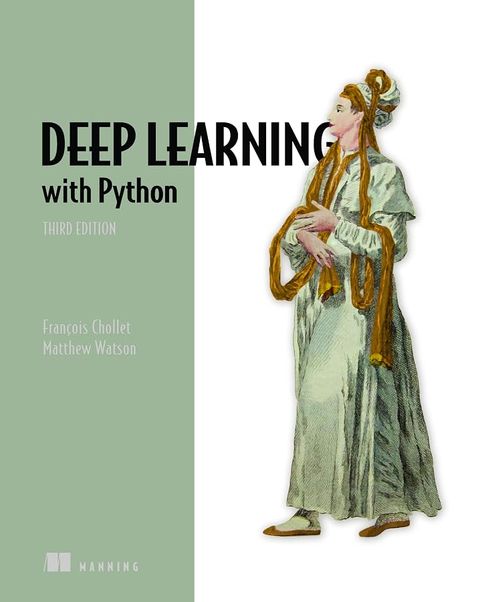
Chollet created Keras, and the book teaches deep learning through the same lens: chains of tensor operations with weights tuned by gradient descent. Every project follows one universal workflow, from defining the task and success metric to beating a baseline and then regularizing. The third edition covers transformers and generative models, and because Keras 3 runs on TensorFlow, PyTorch or JAX, its examples move between backends. Chollet also argues that current networks generalize locally and lack the abstraction and reasoning of human intelligence. The third edition is free to read online, so readers can sample it before buying print.
Editorial score: 86.3/100 - Rank 05
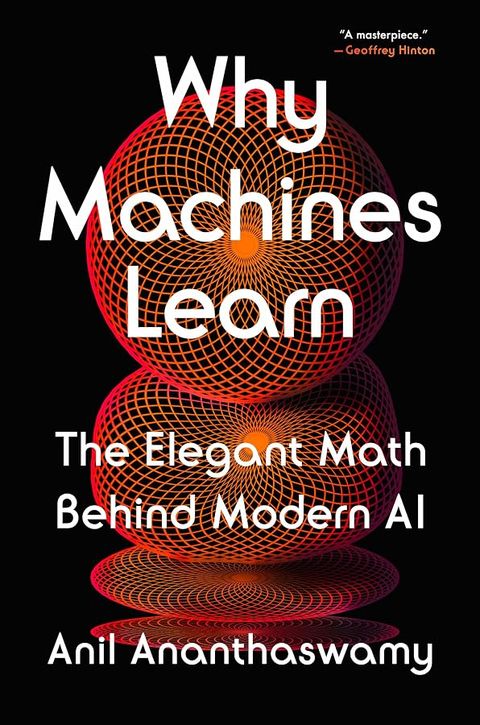
Ananthaswamy, a former New Scientist deputy news editor who trained as an electronics and computer engineer, teaches the mathematics of machine learning through the people and problems that produced it. Readers work through the linear algebra, calculus and probability behind perceptrons, principal component analysis, kernel methods and backpropagation, and see how multilayer networks overcame the limits that stalled single-layer perceptrons in the late 1960s. The book ends on an open research question: why deep networks with far more parameters than classical statistical theory considers safe still generalize. Readers who want the equations explained before meeting them in a textbook should start here.
Editorial score: 74.8/100 - Rank 06
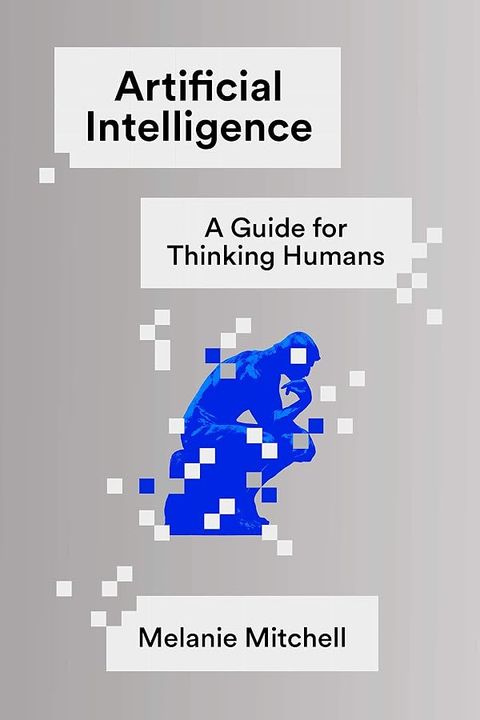
Mitchell, the James B. Alley, Jr. Professor at the Santa Fe Institute, studies abstraction and analogy in AI systems, and that research shapes her account of where deep learning falls short. She explains how image classifiers and game-playing programs beat humans on narrow tests, then shows how slight shifts in conditions, or adversarial changes invisible to people, produce confident errors. The book's 1,393 Amazon ratings are the second-highest count among these 40 titles. Engineers who plan to deploy neural networks gain a catalog of failure modes to test before trusting a model in a high-stakes setting.
Editorial score: 73.3/100 - Rank 07
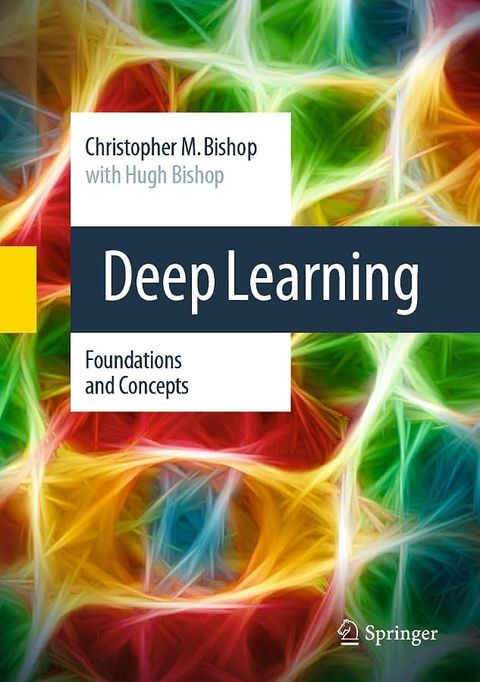
Christopher Bishop, director of Microsoft Research AI4Science, wrote this textbook with Hugh Bishop, an applied scientist at the autonomous-driving company Wayve. It teaches probability first and reuses that language to explain loss functions, uncertainty, backpropagation and regularization. Convolutional networks, transformers and graph neural networks are presented as assumptions about the structure of data, and generative models, from GANs to diffusion, grow from shared latent-variable foundations. Springer Nature names it its bestselling book of both 2024 and 2025, and a free online version lets readers check the level before buying the hardback.
Editorial score: 83.1/100 - Rank 08
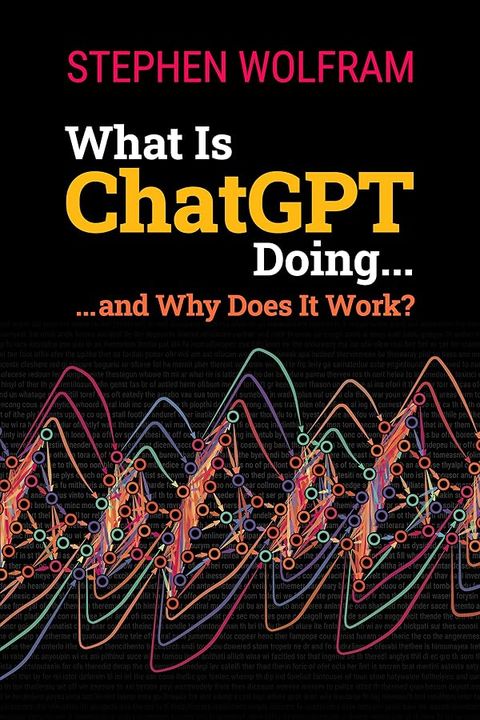
Wolfram explains in a short book how a language model writes: it repeatedly picks a plausible next token from a probability distribution, and a temperature setting that sometimes chooses less likely tokens makes the output read more naturally. He then presents embeddings as points in a high-dimensional space where related meanings sit close together. The math stays light, so it works as a quick conceptual companion to the top pick. Readers should know that the closing section argues for pairing neural networks with exact tools such as Wolfram|Alpha, a product of the author's company. Much of the text also appears as a long essay on his website.
- Rank 09
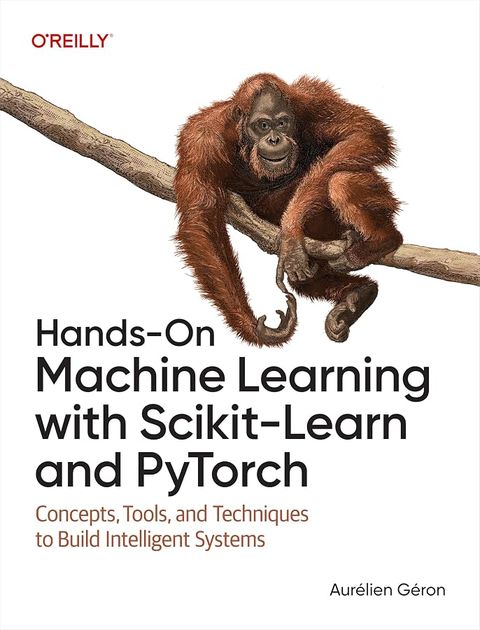
Géron's 2025 edition moves his hands-on series to PyTorch while keeping its end-to-end project method: frame the problem, explore the data, build a pipeline, then tune and evaluate on held-out data. Early chapters treat random forests and boosting as baselines for tabular data, so readers learn when a neural network is unnecessary. The deep learning half builds from autograd and explicit training loops to CNNs, RNNs, transformers and diffusion models, then adds LoRA, gradient accumulation and activation checkpointing for adapting large models on modest hardware. Readers who want one PyTorch course spanning classical machine learning and deep learning should choose it.
- Rank 10
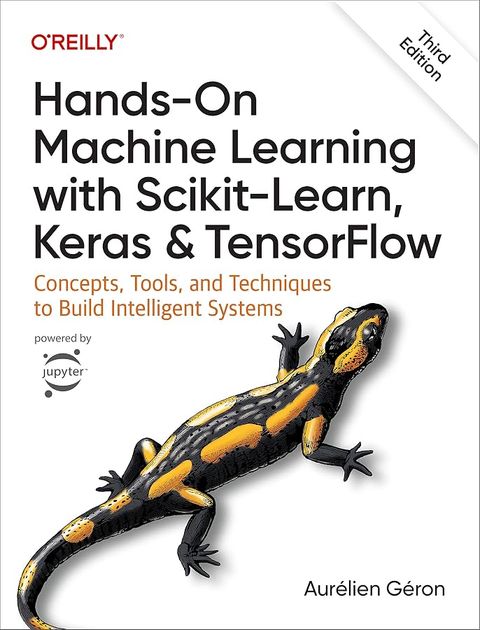
With 912 Amazon ratings at a 4.7-star average, Géron's TensorFlow edition is one of the most widely reviewed titles among these 40. Its end-to-end project teaches habits that matter on any job: framing the problem, cleaning data and setting up sound validation before choosing a model. The deep learning chapters cover initialization, batch normalization, optimizers, learning-rate schedules and dropout, then build convolutional networks, transformers and diffusion models with Keras. Readers committed to TensorFlow or Keras should choose it, while readers starting fresh in PyTorch should take Géron's 2025 edition, ranked one place higher.
- Rank 11
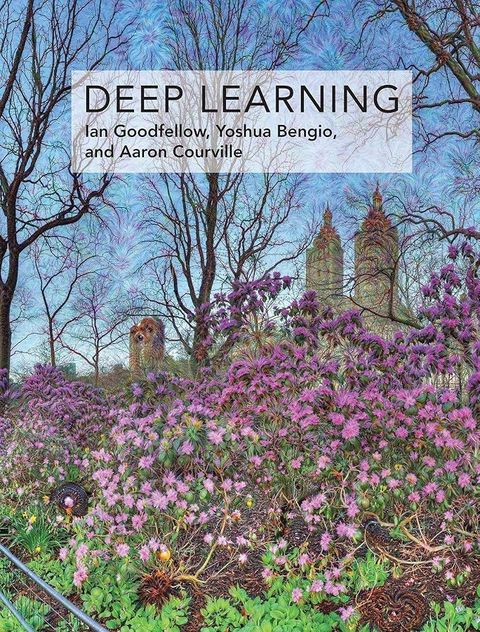
Goodfellow, Bengio and Courville, with Bengio among the 2018 Turing Award recipients, wrote the textbook that more readers have rated on Amazon than any other book here, with 2,401 ratings. It builds from linear algebra, probability and numerical computation through regularization, optimization, and convolutional and recurrent networks, then into research topics such as representation learning and generative models. Its chapter on practical methodology, covering baselines, metrics and the diagnosis of underfitting and overfitting, still applies to any project. Because it predates transformers, readers should pair it with Bishop or Prince for attention and diffusion. The complete text remains free to read online.
Editorial score: 79.8/100 - Rank 12
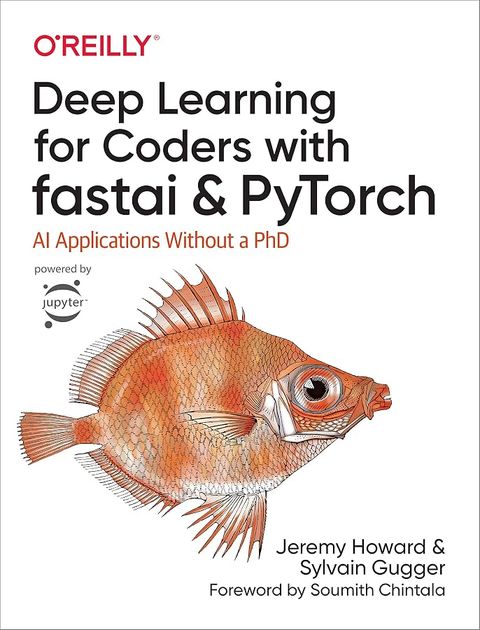
Howard and Gugger teach from the top down: readers train a working model first and study the theory behind it afterward. Transfer learning from pretrained models carries much of the book, showing how small teams reach strong accuracy with modest data and a single GPU. The practical skills it drills, such as finding a learning rate, augmenting data and reading validation loss, transfer to any framework, and its treatment of data ethics covers feedback loops, bias and misuse. The fastai-specific code has aged, but the book also underpins the free fast.ai course, which pairs each lesson with chapters available as notebooks.
- Rank 13
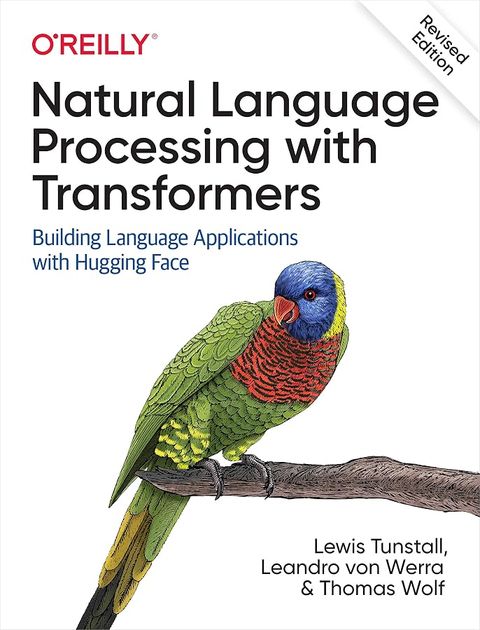
Three Hugging Face developers teach transformer NLP through complete projects built on their own library. Readers tackle text classification, multilingual named entity recognition, text generation, summarization and question answering, and implement self-attention and the encoder and decoder blocks by hand to see what library calls do internally. Chapters on making transformers efficient in production, through distillation, quantization and pruning, and on working with few or no labels remain valuable for deployment teams. The library has changed quickly since 2022, and the official notebook repository marks the question-answering chapter as no longer maintained, so readers should expect to adapt some code.
- Rank 14
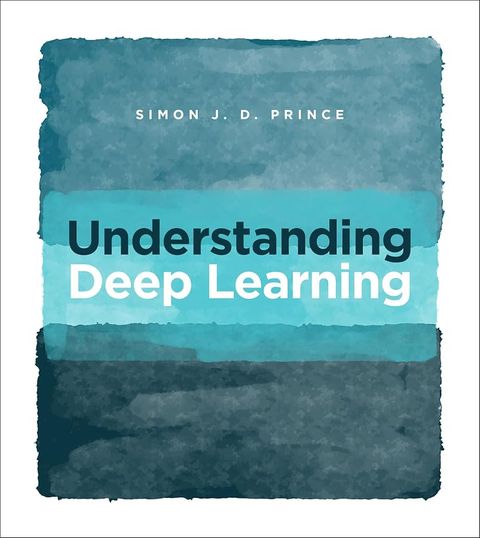
Prince pairs exact mathematics with unusually clear figures, and readers have given the book a 4.9-star average, the highest rating among these 40 titles. It explains why depth helps, showing that deep ReLU networks create far more linear regions per parameter than shallow ones. The middle chapters cover initialization, loss design, optimizers and regularization, then self-attention, residual connections and normalization, the ideas that made large language models trainable at scale. The final chapters treat GANs, normalizing flows, variational autoencoders and diffusion models as different strategies for one task. Readers who find Goodfellow dense or dated should use it for the post-2017 material.
Editorial score: 80.8/100 - Rank 15
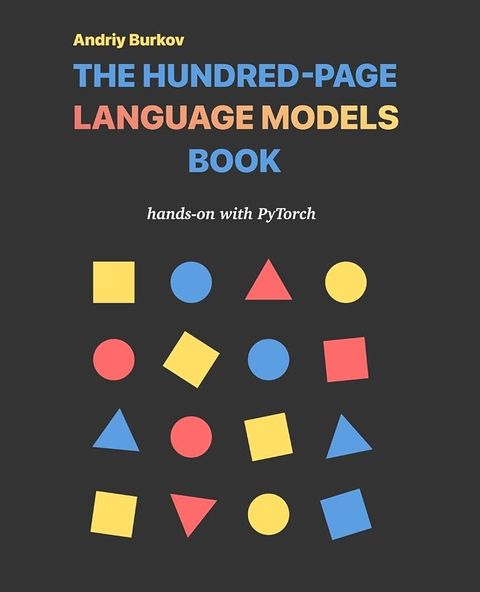
Burkov compresses the path from count-based language models to transformers into a short, code-driven book built on one point: a single objective, predicting the next token, links them all. Readers implement byte-pair encoding and learned word embeddings, see why self-attention displaced recurrent networks for language tasks, and finish by finetuning a pretrained model with instruction data and low-rank adaptation. Engineers who already know Python and want the mechanics of language models in far fewer pages than a textbook should choose it, and it also serves as a compact review after Raschka's longer build.
- Rank 16
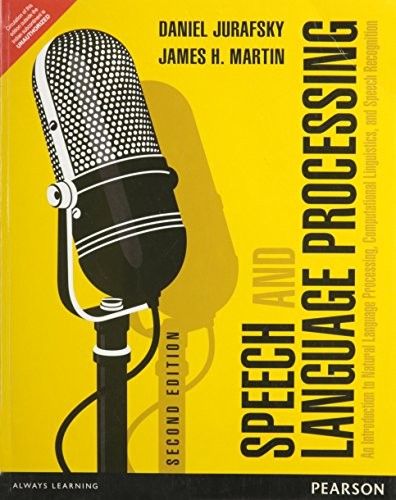
Jurafsky and Martin's textbook has been a standard in NLP courses since its first edition in 2000, and its free online third edition now centers on large language models. It treats text, speech and linguistic structure as one discipline, starting with n-grams and logistic regression so that probability, smoothing and evaluation are clear before neural models appear. Later chapters cover transformers, pretraining on large corpora and post-training, and every task, from tagging and parsing to translation and retrieval, rests on held-out evaluation. Deep learning readers who plan to specialize in language should keep it as their primary reference.
- Rank 17
Zhang, Lipton, Li and Smola built this book from executable notebooks, so nearly every concept arrives with math, prose and code side by side. Each model is implemented from scratch first and then rebuilt concisely with a framework's high-level API, and the code is available in PyTorch, JAX, TensorFlow and MXNet. Coverage runs from linear regression through ResNet-style convolutional designs to attention and transformers. The authors report adoption at 500 universities in 70 countries, and the full text, notebooks and PDF are free online, which makes it the strongest no-cost option for a course or a self-study plan.
Editorial score: 80.3/100 - Rank 18
Raschka, Liu and Mirjalili cover the full arc from classical machine learning in scikit-learn to deep learning in PyTorch. Readers implement a neural network and backpropagation in plain NumPy before switching to a framework, which makes later PyTorch code far easier to debug. Chapters on preprocessing, cross-validation, learning curves and randomized hyperparameter search teach model diagnosis, and the treatment of gradient boosting and XGBoost explains when tree ensembles beat a deep network on tabular data. Readers who want classical and deep learning in one rigorous volume should weigh it against Géron's 2025 PyTorch edition, which adds newer fine-tuning techniques.
- Rank 19
MacKay's textbook treats compression, prediction and learning as one subject, giving deep learning readers the probabilistic foundation that most code-first books skip. It develops Bayesian inference as a single framework for learning, model comparison and uncertainty, and shows Occam's razor emerging from probability theory itself. Chapters on Monte Carlo methods, variational approximations and message passing show how to proceed when exact inference is intractable, and the treatment of low-density parity-check and turbo codes shows the same algorithms at work in communications. The mathematics is demanding, but the text is freely readable online, so prepared readers can try it at no cost.
- Rank 20
Lapan implements reinforcement learning in PyTorch, starting from the simplest method that works. Readers begin with the cross-entropy method, move to deep Q-networks and the extensions that fix specific failure modes, including double DQN, dueling networks and prioritized replay, then reach policy-gradient and actor-critic methods such as A2C, PPO and SAC for continuous action spaces. The 2024 edition adds reinforcement learning from human feedback, the technique used to fine-tune modern language models, along with MuZero. Readers who know deep learning basics and want to implement agents themselves should start here.
- Rank 21
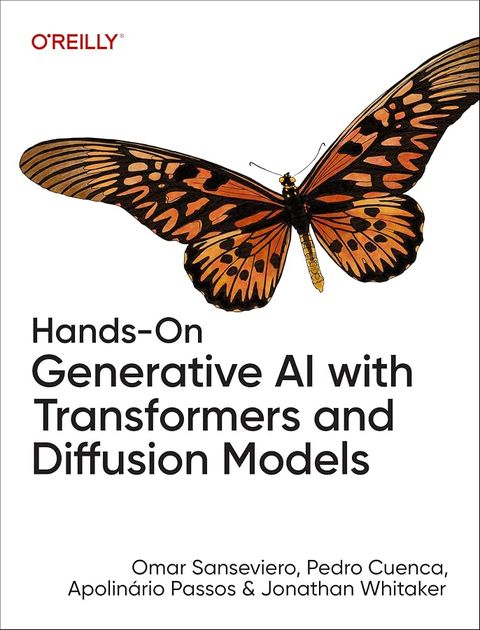
Written largely by Hugging Face practitioners, the book explains how open generative models work and how to adapt them. It treats transformers and diffusion models as related families built from tokenization, embeddings and attention, shows how diffusion models learn to reverse a gradual noising process, and explains how text prompts and other conditioning signals steer image generation. Fine-tuning chapters cover when LoRA and similar parameter-efficient methods pay off, and later material combines text encoders, latent autoencoders and noise schedulers into new applications. Readers who finished Hands-On Large Language Models and want the image side of generative AI should read it next.
- Rank 22
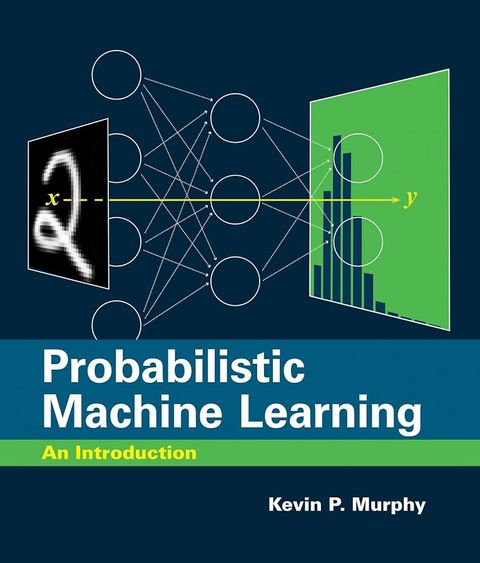
Murphy frames machine learning as probabilistic modeling plus Bayesian decision theory, placing regression, classification, neural networks and unsupervised methods inside one framework. That approach presents deep networks as an extension of likelihood, regularization and uncertainty rather than a break from classical statistics. Readers need solid probability, linear algebra and optimization before starting. Code accompanies nearly every figure, with implementations in JAX, PyTorch and TensorFlow, so equations and working Python stay connected. A companion volume, Probabilistic Machine Learning: Advanced Topics, followed in 2023 for readers ready to go further.
- Rank 23
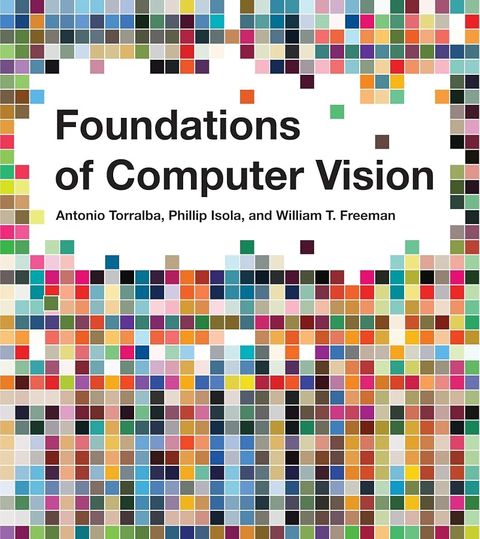
Torralba, Isola and Freeman, all at MIT, connect classic image science, including signal processing, image formation and statistical image models, with modern deep learning. Transformers, diffusion models and representation learning appear as the latest chapters of a continuous story, which helps readers judge which older ideas still improve current systems. Across 55 chapters the authors also treat fairness and ethics as part of technical design and pass on research habits such as studying real pixels closely. MIT Press publishes the print edition, and a full web edition is freely viewable for readers who want to sample it first.
- Rank 24
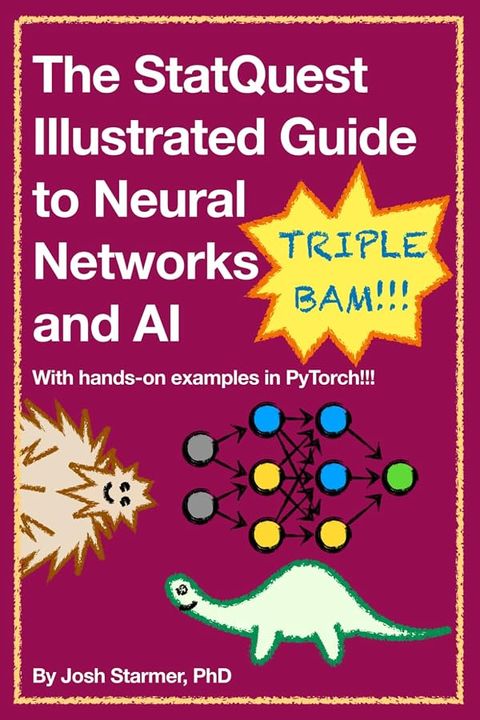
Starmer, creator of the StatQuest teaching series, explains neural networks with step-by-step illustrations that track every number through a calculation. Backpropagation appears as the chain rule applied repeatedly, word embeddings as numbers learned from context, and attention as the fix for the memory bottleneck of earlier encoder-decoder translation models. The book closes with encoder-only and decoder-only transformers and pairs each idea with PyTorch code. Analysts and career-switchers who stalled on denser texts should read it before attempting Bishop or Prince.
- Rank 25
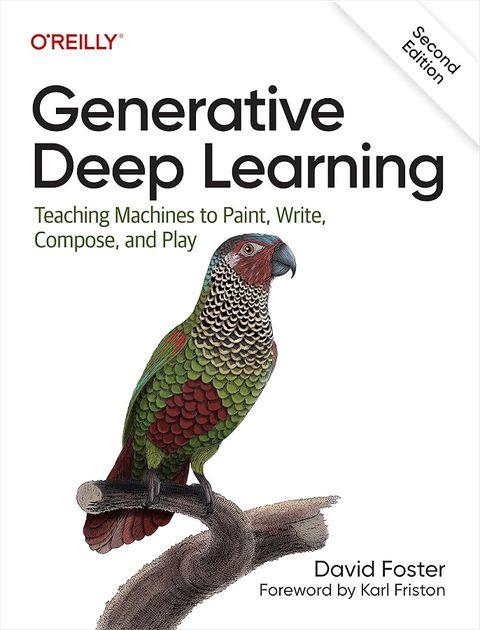
Foster surveys every major family of generative model, including VAEs, GANs, autoregressive models, normalizing flows, energy-based models and diffusion models, and builds each one in Keras. The organizing idea is that each family approximates the probability distribution behind the training data and trades sample quality, speed and tractable likelihood differently, which gives readers a basis for choosing among them. The current edition also covers transformers and their extension from text to music and multimodal work. Practitioners who work in Keras and want breadth across generative methods should choose it, and PyTorch users can still read it for the concepts.
Editorial score: 71.8/100 - Rank 26
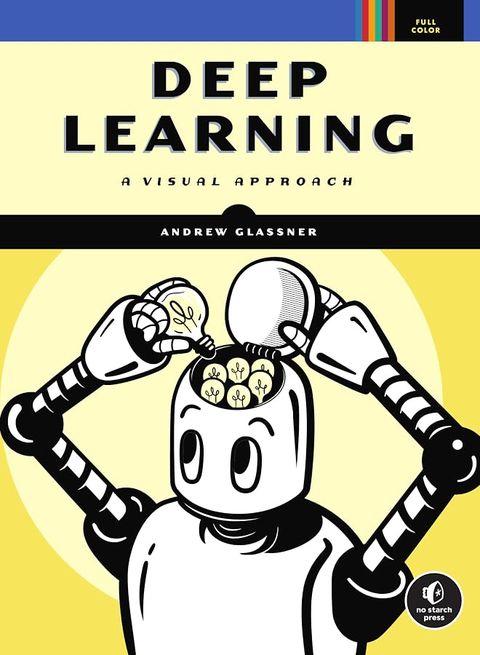
Glassner explains deep learning in pictures and prose without equations. Readers follow the training loop of backpropagation and optimizers, the trade-off between overfitting and underfitting, and the layered filters of convolutional networks, then reach attention and transformers. The book also gives probability, Bayes' rule and information theory intuitive treatments, so readers grasp how models measure error and uncertainty. Managers, designers and programmers who think visually and want more depth than a short primer should choose it over Kelleher's compact introduction.
Editorial score: 66.0/100 - Rank 27
Strang carries readers from the matrix methods of linear algebra to the mechanics of deep learning. The singular value decomposition sits at the center, supporting principal component analysis, low-rank approximation and data compression, and viewing matrix multiplication as sums of rank-one pieces makes many machine learning operations easier to analyze. Later chapters examine stochastic gradient descent and show that a ReLU network computes a continuous piecewise linear function, with backpropagation as the chain rule applied through matrices. Readers should pair it with the free video lectures for MIT course 18.065, which Strang taught.
- Rank 28
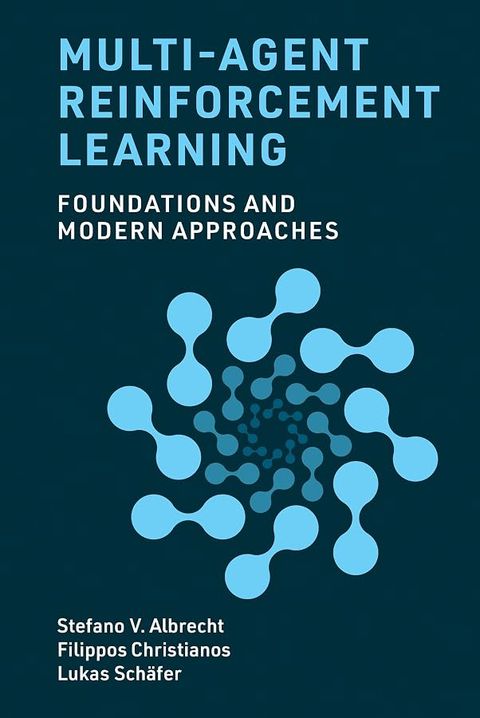
Albrecht, Christianos and Schäfer wrote the first complete textbook on reinforcement learning with many learning agents, a setting that breaks single-agent convergence assumptions because each agent's environment keeps changing. The book first defines solution concepts such as Nash equilibrium, Pareto optimality and social welfare, then covers centralized training with decentralized execution, value decomposition and parameter sharing. MIT Press published it in 2024, and the authors offer the complete book as a free PDF with a companion Python codebase. Readers should finish a single-agent course such as Lapan's or Morales's first.
- Rank 29
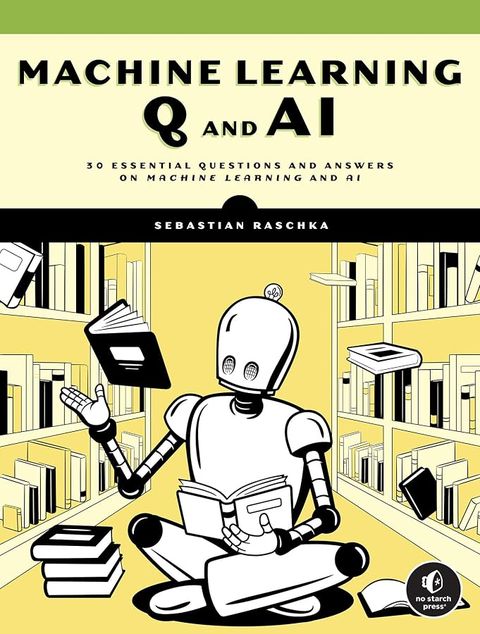
Raschka's third book among these 40 is organized as 30 chapters, each built around one question that readers meet after an introductory course, spanning neural networks, computer vision, language, deployment and model evaluation. Topics include two routes for reducing overfitting, through the data or through the model; the difference between encoder-style and decoder-style transformers; conformal prediction as an alternative to classic confidence intervals; and the sources of randomness that make training hard to reproduce. Readers who have finished a first course and find research papers hard going should use it as a bridge.
Editorial score: 74.3/100 - Rank 30
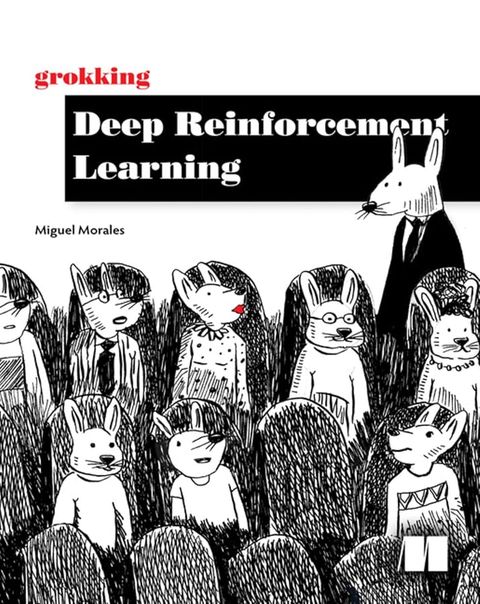
Morales starts with why reinforcement learning is hard: its feedback is sequential, evaluative and sampled all at once, unlike the immediate labels of supervised learning. From there the book builds patiently through bandits and Markov decision processes, measuring the cost of exploration with epsilon-greedy, softmax and upper-confidence-bound strategies, before reaching DQN with target networks and experience replay, double DQN, and the actor-critic methods PPO and SAC. Readers new to reinforcement learning should start with it and move to Lapan's broader implementation guide afterward.
- Rank 31
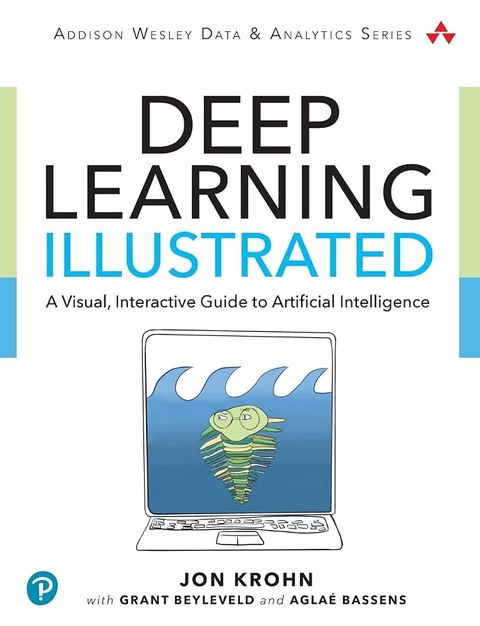
Krohn, Beyleveld and Bassens pair illustrations with runnable code to tour deep learning's major architectures. Readers learn gradient descent and backpropagation, then convolutional networks and the 2012 AlexNet ImageNet result that turned machine vision toward deep learning, then word vectors, generative adversarial networks and deep reinforcement learning agents trained on reward signals. Transformer coverage is thin because the book appeared in 2019. Readers should use it to build intuition across architectures and take language-model material from the newer books ranked above it.
Editorial score: 68.0/100 - Rank 32
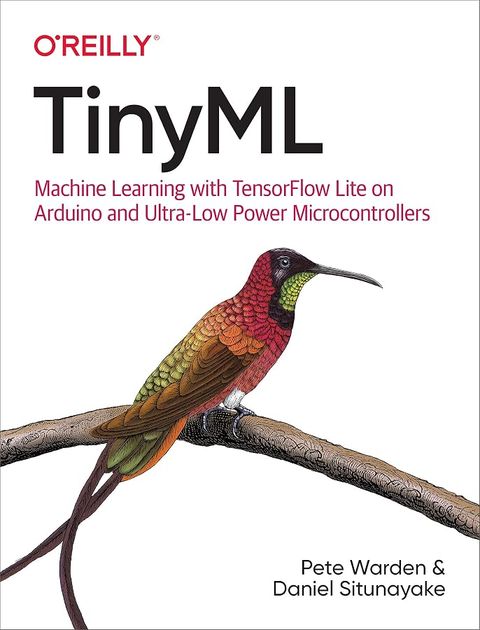
Warden and Situnayake wrote the founding practical guide to running neural networks on microcontrollers with only kilobytes of memory. Projects for wake-word detection, person detection and gesture recognition teach the different preprocessing that audio, image and accelerometer data require, along with quantization and the conversion of TensorFlow models for tiny hardware. On-device inference keeps raw sensor data local, which improves privacy and battery life compared with cloud processing. The toolchain steps have aged, so readers should check current documentation, but no other book among these 40 covers deep learning on embedded hardware.
Editorial score: 74.5/100 - Rank 33
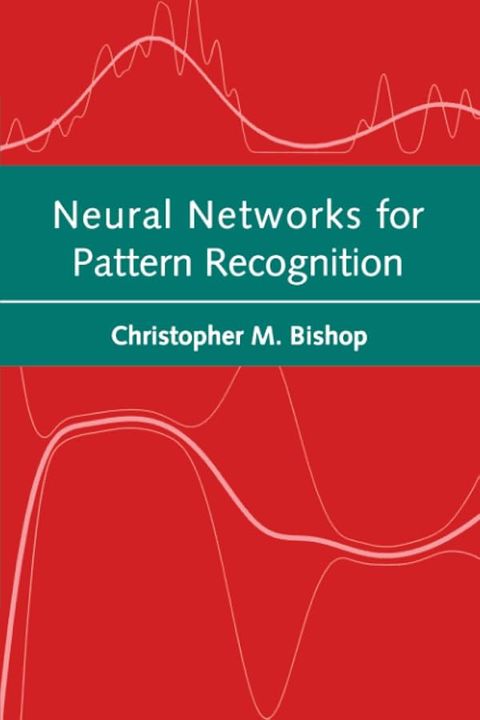
Bishop's 1995 textbook recast neural networks as statistical models, and graduate readers who want the statistical roots of today's methods will find them laid out here. It shows how the choice of error function encodes assumptions about the data, how generalization depends on balancing model complexity against the amount of data, and how Bayesian methods treat weights as uncertain quantities for model comparison and predictive uncertainty. Its architectures predate modern deep learning, so readers should treat it as background and history. Bishop's 2023 Deep Learning, ranked seventh, carries the same probabilistic approach into transformers and diffusion models.
- Rank 34
Kelleher's compact primer explains deep learning as learning functions from data, without asking readers to write code. It covers why depth lets successive layers learn more abstract features, how gradient descent and backpropagation assign each weight its share of the error, and why convolutional networks suit images while recurrent networks and LSTMs suit sequences. Its 500 Amazon ratings at 4.5 stars show broad reach among nonspecialists. Readers who want concepts before code should read it first, then move to a hands-on book such as Chollet's or Géron's.
Editorial score: 62.8/100 - Rank 35
Aminian and Sheng apply a seven-step framework, from clarifying requirements through deployment and monitoring, to generative AI system design problems. Each walkthrough shows how to frame a product request as a specific machine learning task with defined inputs and outputs, which determines the model family and training data. The authors explain when retrieval-augmented generation is worth its added complexity and why generative systems need offline metrics, online measures of user satisfaction and safety filters. Engineers preparing for interviews get a structured method and many diagrams, though agent systems and production operations receive less attention.
- Rank 36
Ekman builds deep learning from a single perceptron and gradient descent through convolutional and recurrent networks to the Transformer, in an order where each step depends on the last. Readers learn why activation functions, initialization, normalization and regularization make deep networks train reliably, and how word2vec and GloVe embeddings turn text into geometry. The printed examples lead with TensorFlow, but the companion repository offers matching PyTorch versions of each example. Developers who want one structured course rather than a collection of recipes should choose it.
Editorial score: 65.3/100 - Rank 37
Kneusel, a deep learning practitioner, explains without equations how artificial intelligence, machine learning and deep learning nest inside one another. He traces why symbolic AI stalled on hand-coded rules and why neural networks advanced once large datasets and powerful hardware arrived, then describes a network as simple units that multiply inputs by weights and sum them. The closing discussion argues that large language models show abilities their designers never explicitly programmed, which makes them a plausible first step toward true AI, a view readers can weigh against Mitchell's more skeptical account. Nontechnical readers who want a short, accurate overview should start with it.
Editorial score: 61.1/100 - Rank 38
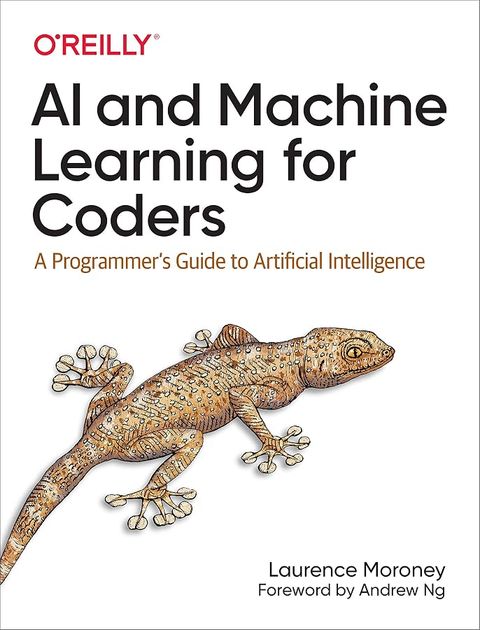
Moroney writes for programmers who have never trained a model, framing machine learning as programming inverted: developers supply data and answers, and the model infers the rules. Readers build image classifiers with convolutions and pooling, prepare text through tokenization, sequencing and embeddings for recurrent layers, and then deploy models to mobile, browser and server runtimes with TensorFlow Lite, TensorFlow.js and TensorFlow Serving. The deployment coverage gives it practical value beyond most introductions, although the framework tooling has changed since 2020, so readers should check current documentation for each runtime.
- Rank 39
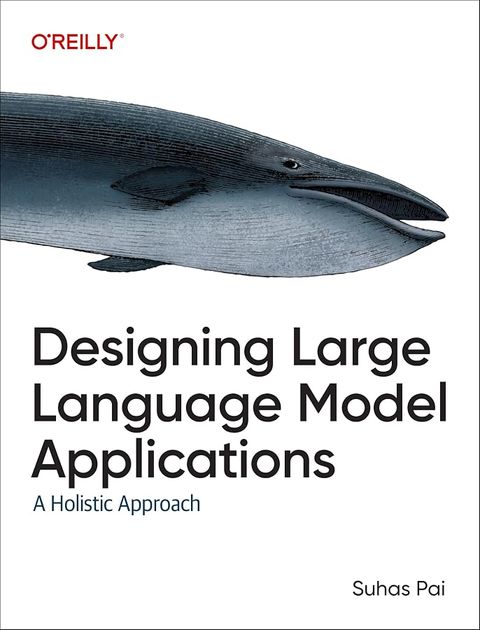
Pai writes for engineers who need to understand model internals before designing production systems. He shows how the composition and cleaning of pre-training data shape a model's strengths and biases, why tokenization affects cost, context limits and performance on numbers and non-English text, and how fine-tuning, parameter-efficient methods and alignment training each solve a different problem. The chapters on retrieval-augmented generation and tool use identify the failure points those extensions add. Technical leads who have built a first LLM prototype and must now make architecture decisions should read it.
- Rank 40
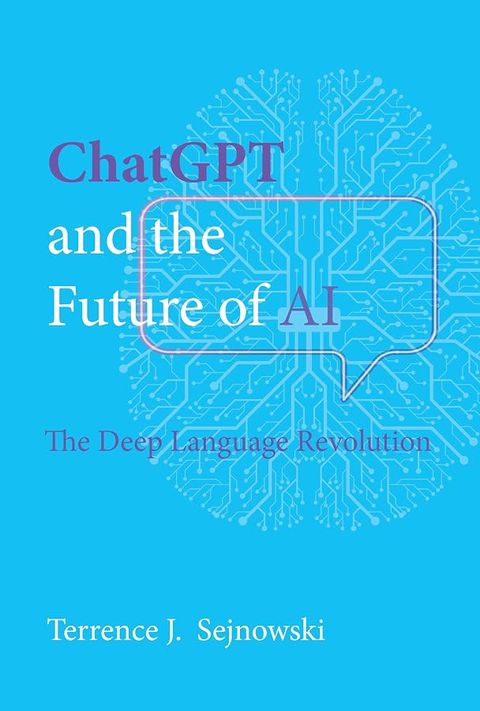
Sejnowski, who holds the Francis Crick Chair at the Salk Institute and heads its Computational Neurobiology Laboratory, brings a neural network pioneer's perspective to large language models. He questions how understanding and intelligence should be defined, weighs the idea that a chatbot's apparent intelligence partly reflects the person prompting it, and ties transformer progress to computing power and energy supply. His expectation that future AI will borrow more from neuroscience, including long-term memory and the brain's energy efficiency, gives the book its distinct angle. The structure is discursive, so readers seeking a technical explanation should start with Wolfram or Raschka.
Editorial score: 68.3/100

How we ranked these books
Each book was scored on six signals: reach, measured by the number of Amazon ratings and by sales rank; critical consensus, measured by how often the title appears on independent best-of lists; awards and honors; average reader ratings; author authority, meaning a record of research, teaching or engineering in the field; and an editorial score for clarity, accuracy and currency. Sebastian Raschka's Build a Large Language Model (From Scratch) ranks first because it pairs a 4.5-star average across about 660 Amazon ratings with the most direct path to understanding modern language models: readers write the data pipeline, attention, pretraining and fine-tuning code themselves in PyTorch, then adapt the same model for classification and instruction following.